


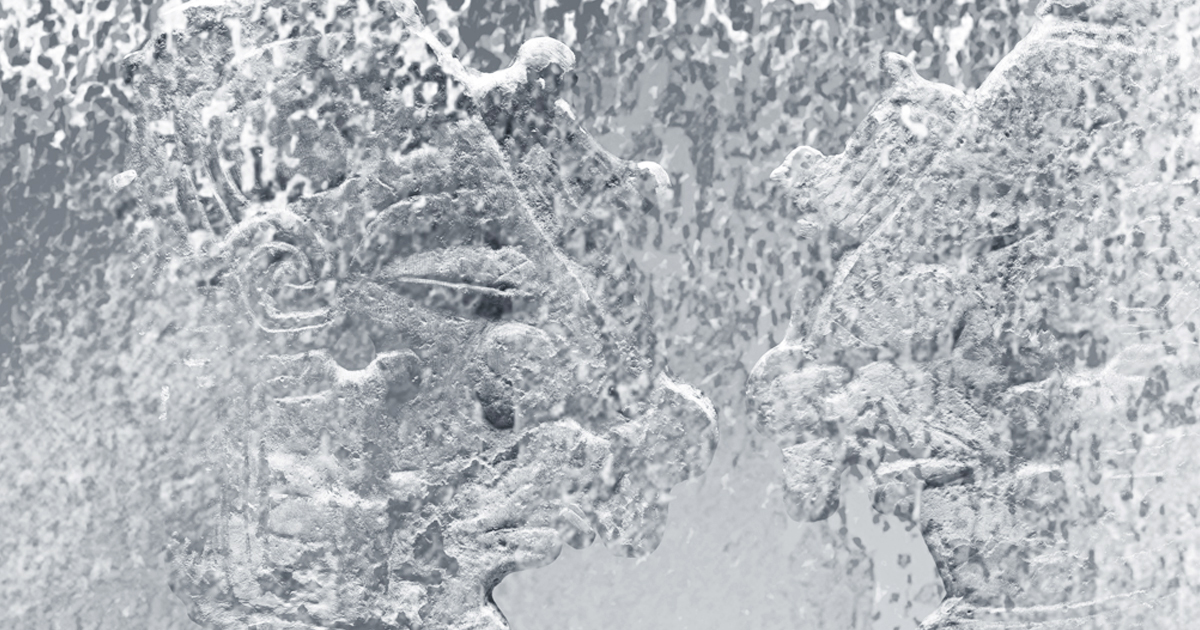
In the following texts, we will take a closer look at the earliest spiritual concepts – animism, animatism, fetishism, magic, totemism and shamanism – and their manifestations in the present day, and we will also explore art from different periods that is associated with them. Some works were created as part of rituals, while others drew on them or were inspired by the ideas of these systems. The first concept we will focus on is animism.
Animism was originally widespread throughout the world, particularly among hunter-gatherer communities, and it persists to this day.[1] It can be understood in a narrower or broader sense, either as a theory concerned with the study of psychic concepts or of spiritual beings.[2] The Scottish philosopher David Hume (1711–1776)[3] regarded animism as the result of a natural human tendency to attribute properties characteristic of human beings to objects.[4] According to the Belgian anthropologist Istvan Praet,[5], [6] it is based on a certain limitation – people tend to restrict animistic perception to their immediate surroundings.[7]
E. B. Tylor, who was mentioned in the previous article, is regarded as the father of animism as an anthropological concept.[8] Tylor argued that animists perceive nature as animated, with this perspective consisting primarily of a sensitivity to the souls dwelling within it. He formulated his theories about the way prehistoric people thought on the basis of available sources documenting observations of members of indigenous peoples.[9] Tylor adopted the term animism from the German chemist and physicist Georg Ernst Stahl (1660–1734),[10] the author of a hypothesis concerning the ability of souls or spirits to control the human body, including its processes.[11]
The term animism itself was derived from the Latin word anima, which denotes the soul, but also breath, spirit or life.[12] The soul was also identified with breath in other cultures. This is evidenced by traces in various languages in which a single common term is used for both concepts. The Greenlanders believed that humans have two souls – a shadow and a breath, while the Malays thought that the soul leaves the body through the nose.[13]
The British anthropologist Sir James George Frazer (1854–1941)[14] mentions animistic notions of souls in his well-known book The Golden Bough (The Golden Bough) from 1890, which in many cultures were perceived as more ethereal versions of human bodies, although similar to them in form.[15] The notion of the soul as a bird is common. Its prevalence is confirmed by references in many languages.[16] Africans, meanwhile, believe that a person dies when their shadow is taken away.[17] The soul was also identified with a reflection on the surface of water,[18] or was contained in a visual representation of a person.[19] The core of animism initially lay in thinking about human souls, arising from the need to explain the causes of illness, dreams or death; concepts of the spirits and souls of animals, plants, objects or natural phenomena were probably derived later.[20], [21]
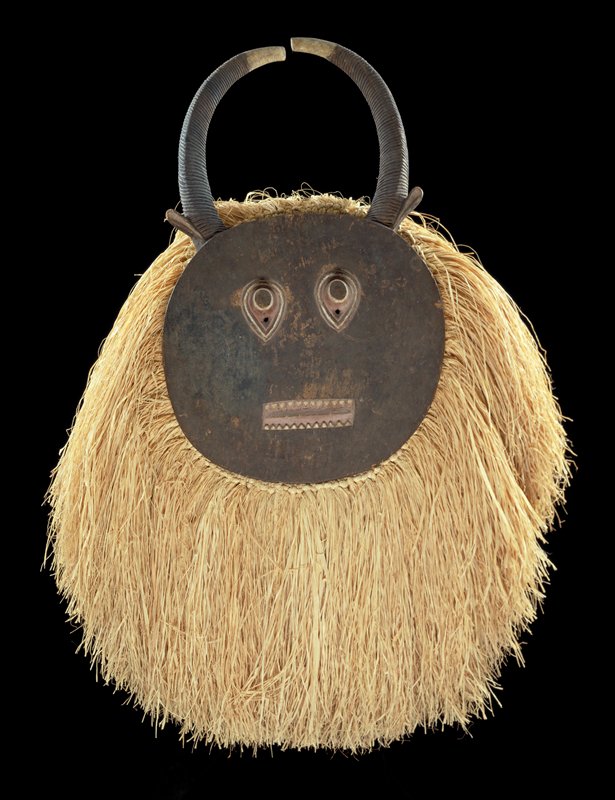
Fig. 1: Unknown artist from the Baule people, Côte d’Ivoire, Kpele Kpele Mask, wood, reconstructed raffia collar, 111.8 × 67.3 × 44.5 cm, 19th century
Source: The William Hood Dunwoody Fund / Public Domain (CC-PDM)
Masks are closely associated with animism and are particularly widespread in Africa and Japan. In some African cultures, masks are connected with the animistic belief that the spirits of ancestors, animals or natural forces enter them and then pass through them into people who, by putting them on, relinquish their own identity. Masks are made from various materials. They are complemented by a costume that is equally important and covers the entire body, resulting in a complete concealment of identity. The process of transformation into a spirit involves a ritual performance with music and dance.[22]
An example of an animistic mask depicting the figure of Kpele Kpele, created by an artist from the Baule people living in Côte d’Ivoire, can be seen in Fig. 1.[23]
Fig. 2 shows a mask originating from the Chokwe people and representing the spirit of an ancestor.[24]
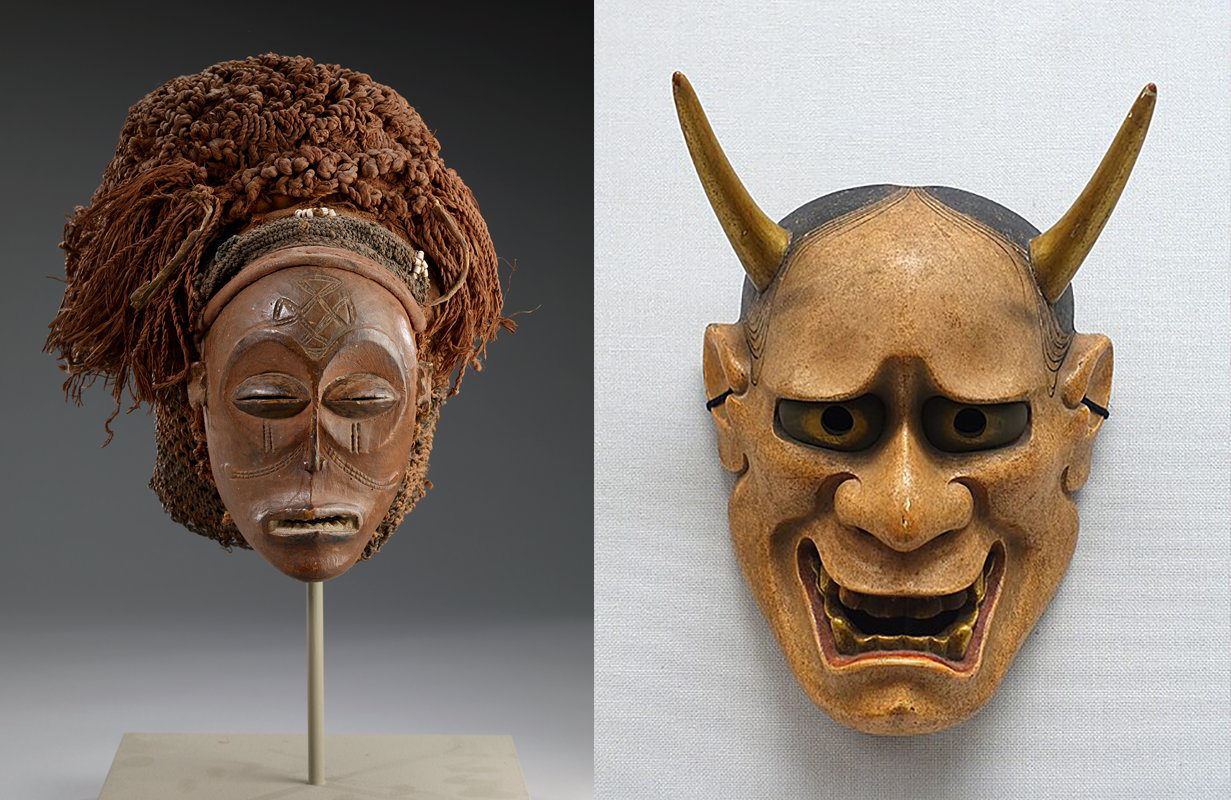
Fig. 2: Unknown artist from the Chokwe people, Angola or the Democratic Republic of the Congo, Mask, wood, plant fibres, glass beads and metal, 26.7 × 26.7 cm, 1920–1930
Source: The William Hood Dunwoody Fund / Public Domain (CC-PDM)
Fig. 3: Unknown artist, Hannya, Nō-type mask with the inscription Omi utsu, wood, polychrome, Edo period (17th–18th century)
Source: Daderot / Wikimedia Commons (Public domain)
The demonic Japanese mask Hannya, dating from the late 18th century during the Edo period, can be seen in Fig. 3. It depicts the spirit of a jealous woman consumed by anger. The twisted face almost resembles that of an animal. The mask was used during a performance of Nō,[25] which could be characterised as a traditional musical drama. Although the origins of this genre date back to the 14th century, its roots reach even further back – it developed from older types of theatrical performances and has survived to the present day.[26] Performers in Nō dramas often portray spirits, demons or gods.[27] There are more than 200 masks in this type of performance, and, as in Africa, they are not perceived merely as ordinary props. Their animistic character is evidenced by the belief among actors and spectators that a mysterious spiritual force is concealed within them.[28], [29]
In the lives of prehistoric people, animals played an important role, as their survival often depended on them; it is therefore understandable that they are also a significant part of the animistic system, in which they are perceived differently from the way they are in Western culture. Animists compare their behaviour and vocal expressions to those of humans and also consider their thinking to be similar to ours. They believe in metempsychosis – an animal may possess a soul that was previously human and belonged, for example, to a deceased ancestor or friend.[30] Native Americans regarded animals as younger brothers and believed that they possessed a soul in the same way as humans.[31] The darker side of animism is animal sacrifice. Animals were sacrificed, for example, at funerals – the Aztecs and Greenlanders sacrificed dogs, Native Americans horses, and Bedouins camels…[32]
Souls are also attributed to plants. In his book Primitive Culture, Tylor gives examples from various cultures according to which people with animistic beliefs think that, for example, rice not only has a soul but can also become ill like a human being.[33] References to a spirit or god of maize are particularly interesting. The importance of this crop lies in the fact that it is used to make bread, which represents a universal symbol of food, sustenance and a source of vital force. In some parts of Europe, the spirit of maize took the form of a cat. Many superstitions and rituals are associated with bread, and people treat it with reverence, which is also evident in our culture.[34]
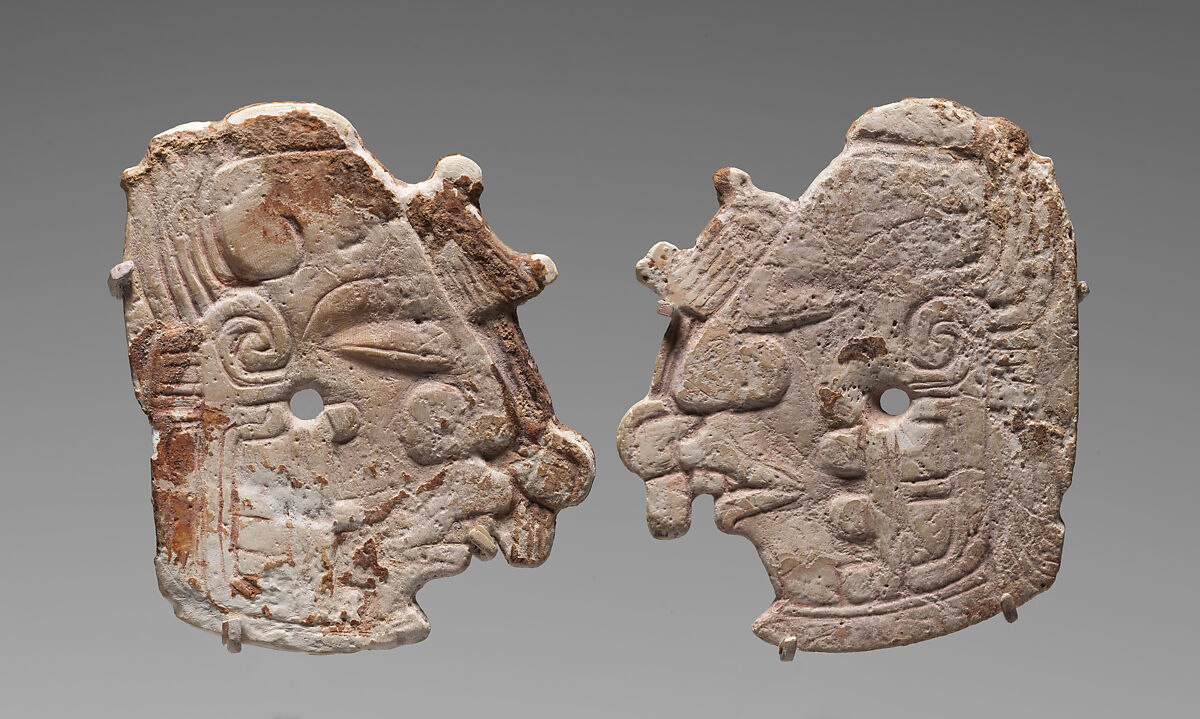
Fig. 4: Unknown Maya artist, Pair of Carved Ornaments with the Maize God, shell, 5.7 × 4.8 × 0.3 cm, AD 400–700
Source: The Metropolitan Museum of Art / Public Domain
The god (or spirit) of maize also became an artistic subject. An example is provided by two finely carved Maya shell ornaments (Fig. 4) from the Lowland Maya region, depicting the head of the maize god, which probably served as earrings intended for enlarged openings in the earlobes.[35] As this material was highly valued in Maya culture, they presumably belonged to a wealthy owner. Interestingly, although the ornaments appear similar, closer examination of the carving technique suggests that each was probably created by a different artist.[36]
At the dawn of history, according to Frazer, Europe was covered with primaeval forests, so it is understandable that the ubiquitous enormous trees, which reached high towards the heavens, became objects of worship. According to him, the best-known tree worshippers included the Germans, Celts and Swedes.[37] Trees also played an important role in the lives of the ancient Greeks and Italians, who treated sacred trees with great reverence, and any threat to them was accompanied by general consternation.[38]
Animists regard trees as conscious beings, perceiving them in various ways. In some cultures, they are approached as individuals with souls of their own; others, in accordance with the principles of the doctrine of transmigration, regard them as plants inhabited by the souls of humans, various spirits and gods, or as fetishes possessed by demons.[39], [40]
Frazer provides many examples demonstrating that animists in various parts of the world treat them in ways similar to human beings: they compare their injury to that of a person, treat them considerately, give them wine to drink, hold feasts for them, offer sacrifices to them and, in some cultures, even marry them. Harming a tree is often associated with a taboo, the violation of which is supposedly believed to cause illness or misfortune.[41] Some animists believe that trees are animated by the souls of the dead – these either continue to live in the tree and die with it, or move into another vessel.[42]
Souls, however, are not attributed only to humans, animals and plants. In some cultures, they are also attributed to objects – natural or made by humans. The worship of stones is common, from which animists expect benefits in the form of favourable weather, protection, a good harvest or an easy childbirth.[43] Spirits may also be present in water – they are responsible for its movement or cause illness when the water is drunk.[44]
Native Americans believe that spirits are found everywhere in nature and call them manitu. They are governed by the Great Manitou, are found in plants, animals and natural phenomena, and come into contact with humans.[45]
Belief in the souls of objects can also be observed among the Algonquins, Karen and Fijians. These peoples bury their dead with objects intended to accompany them on their journey into the afterlife, or sacrifice these objects during ceremonies.[46] The bereaved believe that the souls of the dead can possess these objects even after they have decomposed, rotted, burnt or been consumed, in an immaterial form.[47] The reason for this practice is the supposed benefit to the deceased, fear of their anger, or a disregard for mortality – the belief that the deceased can continue, with the help of these objects, to perform the activities in which they engaged while alive.[48]
Animism was also manifested in connection with the explanation, treatment and prevention of diseases. According to animists, illness and death arise from the intrusion of a foreign soul or spirit into the body (for example, as a result of an insult or the destruction of the original vessel), the violation of a taboo, or the loss or damage of one’s own soul during sleep.[49] In connection with the animistic understanding of diseases, their causes and treatment, numerous theories, superstitions and rituals arose throughout the world.[50]
As Frazer demonstrates, animists believe that the soul can be caught in a cloth doll, a lump of clay or a bowl and returned to the sick person in this way. The soul can be stolen from another person and placed into the body of a sufferer, who subsequently recovers, or it can temporarily be placed in various objects, for example during a move or childbirth. By stealing the soul and imprisoning it, it is supposedly even possible to deliberately cause the death of one’s enemies.[51], [52] The theory that illness is caused by possession by a spirit or demon is illustrated by nothing better than exorcism.[53]
Animistic perception has persisted into the present day, not only among peoples living in close relation to nature, but also, for example, in Shinto and polytheistic religions, in which the Latin term genius, meaning a spirit but also an angel, has become established for the spirits of people, places and objects.[54]
According to the Austrian psychiatrist, neurologist and founder of psychoanalysis Sigmund Freud (1856–1939),[55] animism survived into the modern era in the form of folk superstitions (which he considered worthless), but also as the basis of language, religion and philosophy. He did not, however, regard it as a religion. According to him, the animistic system (which he also calls mythological) was the most detailed of the three great worldwide systems (the other two being the religious and scientific systems), and psychology emerged from it.[56]
References
[1] SMITH, T., Animism. [online]. [cited 2025–3–12] Available at: https://iep.utm.edu/animism/.
[2] FREUD, S., Totem and Taboo : Resemblances between the Psychic Lives of Savages and Neurotics, 1919, p. 38.
[3] David Hume. [online]. [cited 2025–11–18] Available at: https://www.britannica.com/biography/David-Hume
[4] FREUD, S., Totem and Taboo: Resemblances between the Psychic Lives of Savages and Neurotics, 1919, p. 40.
[5] Dr. Istvan Praet. [online]. [cited 2025–1–18] Available at: https://www.carsoncenter.uni-muenchen.de/fellows/sof/former_fellows/istvanpraet/index.html
[6] His date of birth is not publicly available.
[7] PRAET, I., Animism and the Question of Life : Abstract, 2013.
[8] WILLERSLEV, R., The Anthropology of Ontology Meets the Writing Culture Debate, 2016, p. 5.
[9] SMITH, T., Animism. [online]. [cited 2025–3–12] Available at: https://iep.utm.edu/animism/
[10] CHANG, K. K–M., Georg Ernst Stahl. [online]. [cited 2024–11–18] Available at: https://www.britannica.com/biography/Georg-Ernst-Stahl
[11] SWANCUTT, K., Animism, 2019. In STEIN, F. (ed.), Open Encyclopedia of Anthropology : Facsimile of the first edition in The Cambridge Encyclopedia of Anthropology, 2019. [online]. [cited 2024–11–14] Available at: http://doi.org/10.29164/19anim, p. 5.
[12] Ibid., p. 5.
[13] TYLOR, E. B., Primitive culture : Volume I, 1888, p. 432.
[14] Sir James George Frazer. [online]. [cited 2025–1–9] Available at: https://www.britannica.com/biography/James-George-Frazer
[15] FRAZER, J. G., The Golden Bough (Vol. 1 of 2) : A Study in Comparative Religion, 1894, p. 116.
[16] Ibid., p. 118.
[17] TYLOR, E. B., The Philosophy of Religion among the Lower Races of Mankind, 1870, p. 372.
[18] FRAZER, J. G., The Golden Bough (Vol. 1 of 2) : A Study in Comparative Religion, 1894, pp. 137, 138.
[19] JAFFÉ, A., Symbolism in the visual arts, 1964. In JUNG, C. G., VON FRANZ, M. L. (eds.), Man and his symbols, 1964, p. 235.
[20] FREUD, S., Totem and Taboo : Resemblances between the Psychic Lives of Savages and Neurotics, 1919, p. 39.
[21] TYLOR, E. B., Primitive culture : Volume I, 1888.
[22] African Masks and Masquerades : Learn the meanings behind the masks. [online]. [cited 2024–12–18] Available at: https://new.artsmia.org/programs/teachers-and-students/teaching-the-arts/five-ideas/african-masks-and-masquerades
[23] Ibid.
[24] Ibid.
[25] Masks. [online]. [cited 2024–12–18] Available at: https://rietberg.ch/en/stories/3215
[26] KRAEMEROVÁ, A., Japonské divadlo Nó, 2018. [online]. [cited 2024–12–18] Available at: https://www.iliteratura.cz/clanek/39469-zeami-motokijo-pouceni-hercum
[27] JAFFÉ, A., Symbolism in the visual arts, 1964. In JUNG, C. G., VON FRANZ, M. L. (eds.), Man and his symbols, 1964, p. 238.
[28] Noh Masks Database. [online]. [cited 2024–12–18] Available at: https://www.the-noh.com/sub/jp/index.php?mode=db&action=e_index&class_id=1.
[29] African Masks and Masquerades : Learn the meanings behind the masks. [online]. [cited 2024–12–18] Available at: https://new.artsmia.org/programs/teachers-and-students/teaching-the-arts/five-ideas/african-masks-and-masquerades
[30] TYLOR, E. B., Primitive culture : Volume I, 1888, p. 469.
[31] TYLOR, E. B., The Philosophy of Religion among the Lower Races of Mankind, 1870, p. 373.
[32] Ibid., p. 373.
[33] TYLOR, E. B., Primitive culture : Volume I, 1888, p. 475.
[34] CAVENDISH, R., Man, Myth and Magic : The illustrated Encyclopedia of Mythology, Religion and the Unknown, 1983, p. 331, 419.
[35] This type of earring is currently referred to as a “tunnel” or “plug” (in English, “earflares” or “earspools”). In HENDERSON, L. R., Pair of carved ornaments with the Maize God. [online]. [cited 2024–12–19] Available at: https://www.metmuseum.org/art/collection/search/317760
[36] HENDERSON, L. R., Pair of carved ornaments with the Maize God. [online]. [cited 2024–12–19] Available at: https://www.metmuseum.org/art/collection/search/317760.
[37] FRAZER, J. G., The Golden Bough (Vol. 1 of 2) : A Study in Comparative Religion, 1894, pp. 58, 59.
[38] Ibid., pp. 59, 60.
[39] TYLOR, E. B., Primitive Culture. Vol. II. : Researches into the development of mythology, philosophy, religion, language, art, and custom, 1920, p. 215.
[40] TYLOR, E. B., Primitive culture : Volume I., 1888, p. 476.
[41] FRAZER, J. G., The Golden Bough (Vol. 1 of 2) : A Study in Comparative Religion, 1894, pp. 61, 62, 67, 68, 73.
[42] Ibid., pp. 63, 65.
[43] TYLOR, E. B., Primitive Culture : Vol. I : Researches into the development of mythology, philosophy, religion, language, art, and custom, 1920, p. 161.
[44] TYLOR, E. B., Primitive Culture : Vol. II : Researches into the development of mythology, philosophy, religion, language, art, and custom, 1920, pp. 210, 214.
[45] Manitou. [online]. [cited 2024–12–20] Available at: https://www.britannica.com/topic/manitou-North-American-Indian-religion
[46] TYLOR, E. B., The Philosophy of Religion among the Lower Races of Mankind, 1870, p. 373.
[47] TYLOR, E. B., Primitive culture : Volume I., 1888, p. 487.
[48] Ibid., pp. 484, 485.
[49] SAFRONOV, A. G., Psychological practices in mystic traditions : from archaic to our days, 2011, p. 112.
[50] TYLOR, E. B., Primitive culture : Volume I., 1888.
[51] FRAZER, J. G., The Golden Bough (Vol. 1 of 2) : A Study in Comparative Religion, 1894, pp. 124, 125, 127, 130, 131.
[52] Ibid., p. 679.
[53] TYLOR, E. B., Primitive Culture : Vol. II : Researches into the development of mythology, philosophy, religion, language, art, and custom, 1920, pp. 124, 125.
[54] DOČKAL, V., Prístupy k nadaniu v kontexte dejín, 2012, p. 76.
[55] Sigmund Freud. [online]. [cited 2024–12–17] Available at: https://biografia.sk/sigmund-freud/
[56] FREUD, S., Totem and Taboo : Resemblances between the Psychic Lives of Savages and Neurotics, 1919, p. 39.
Complete bibliographic details for these sources can be found here.