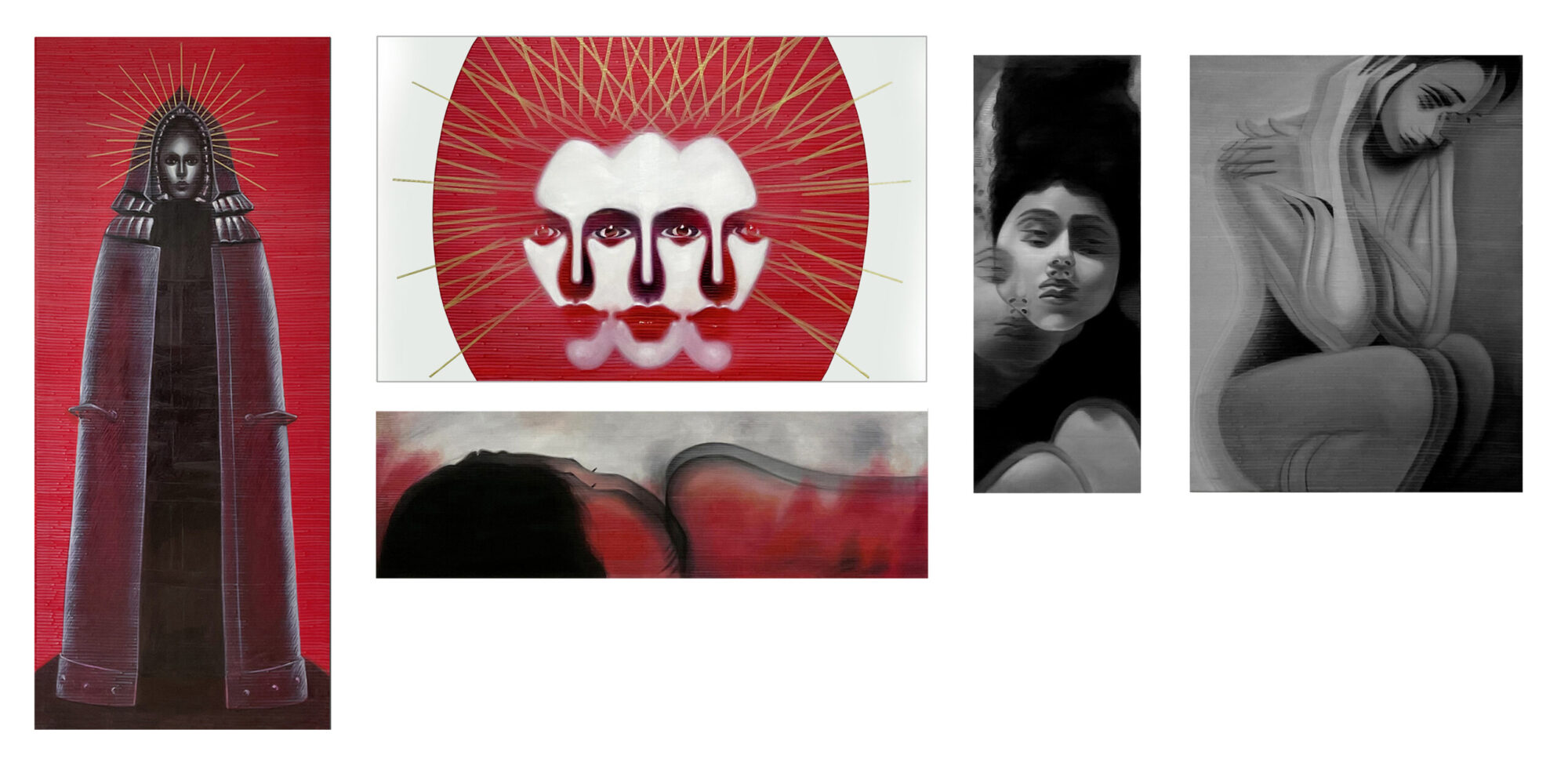
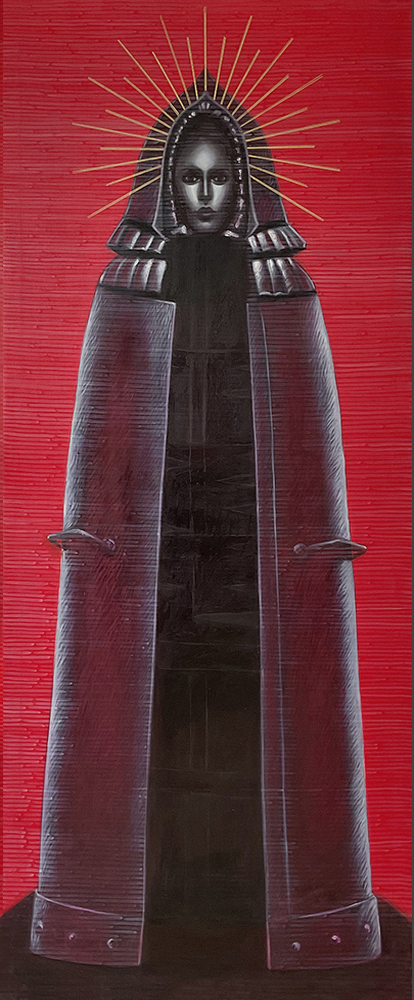
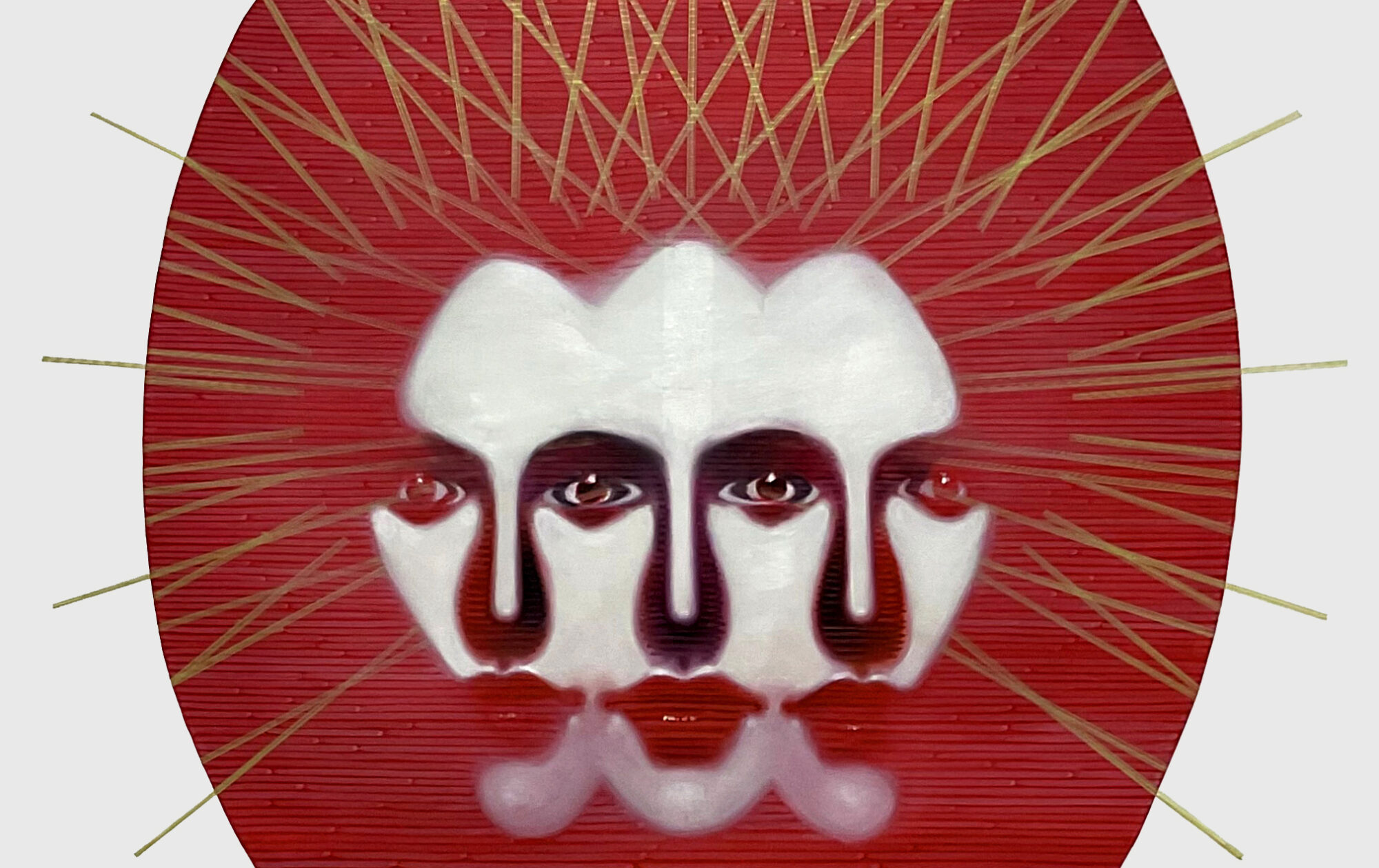
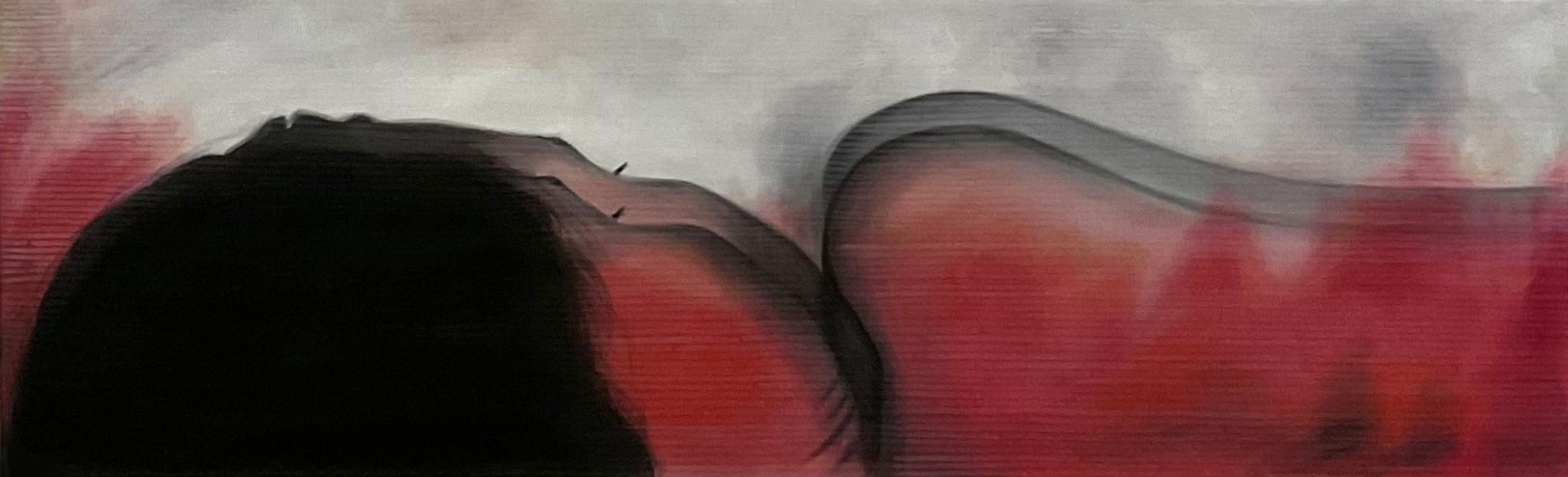
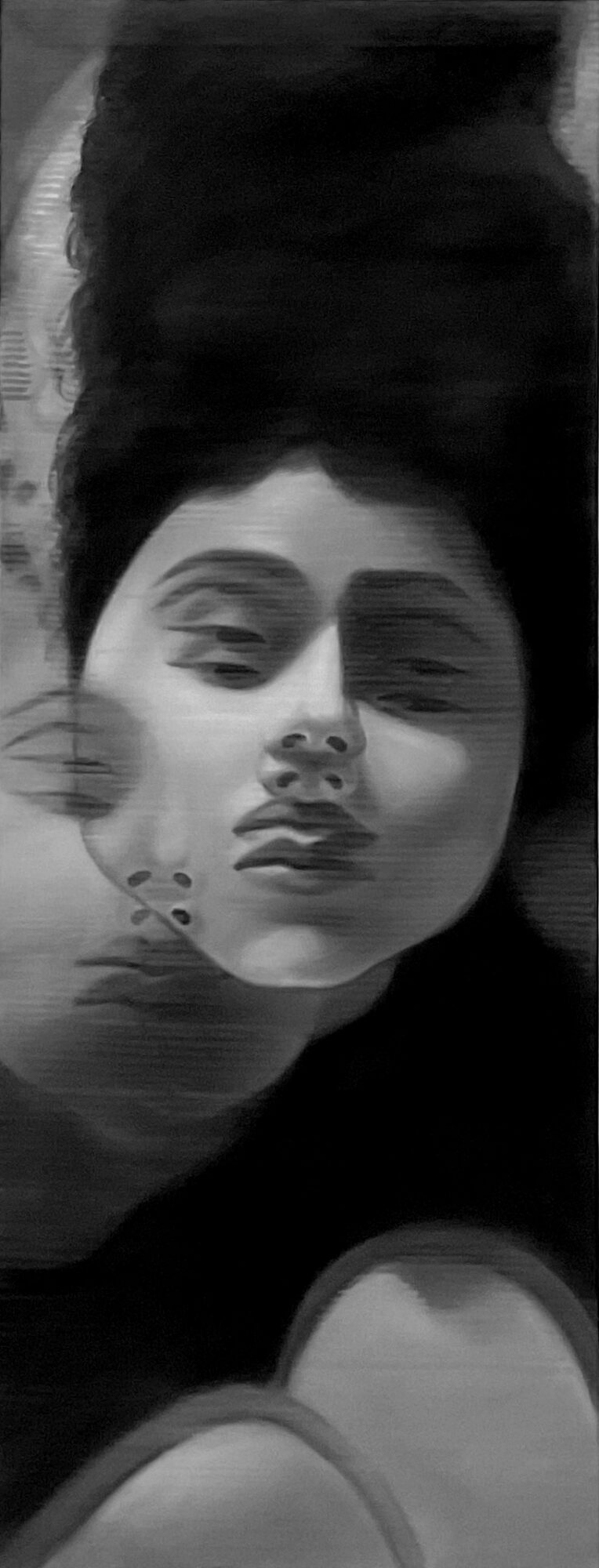
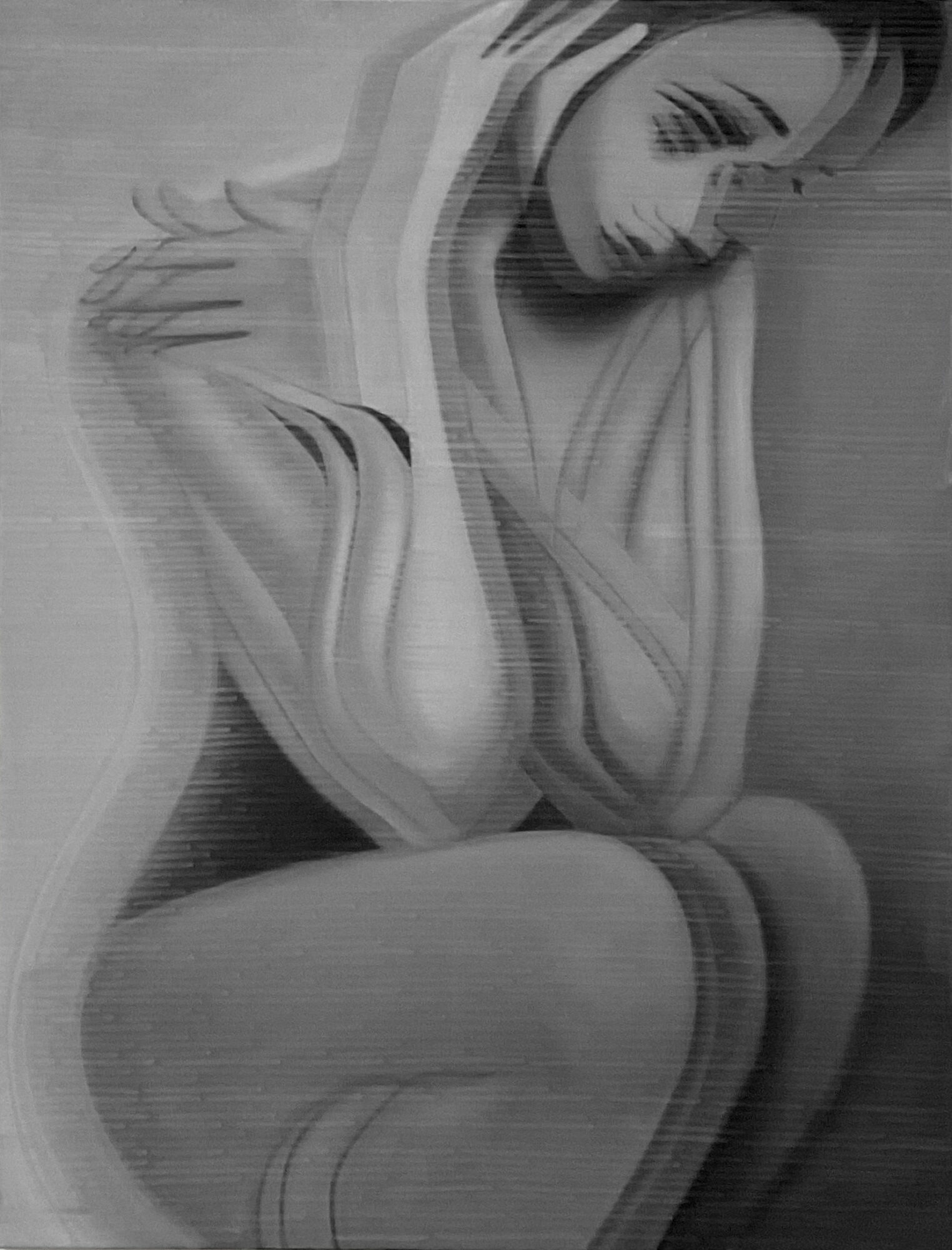
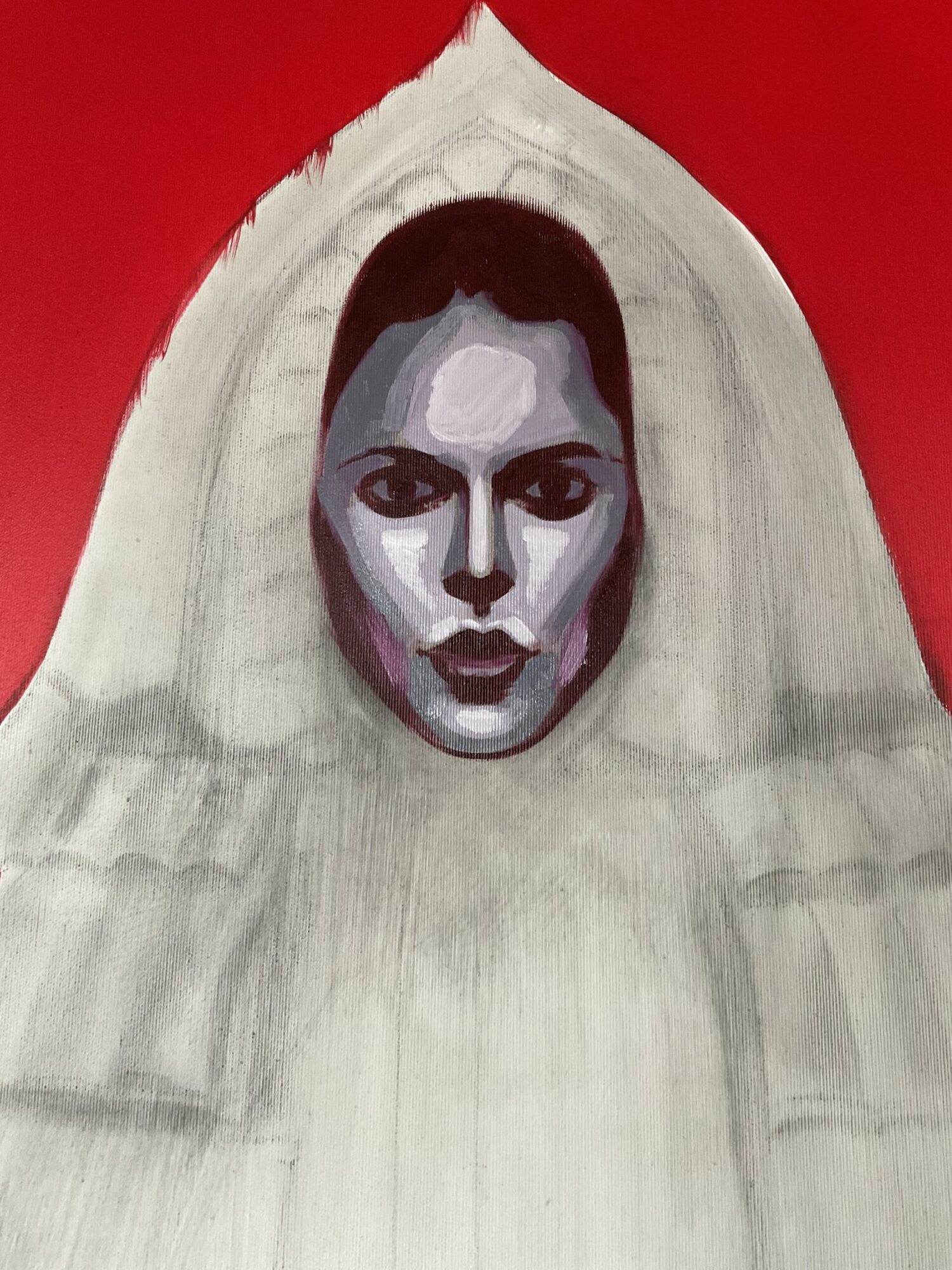
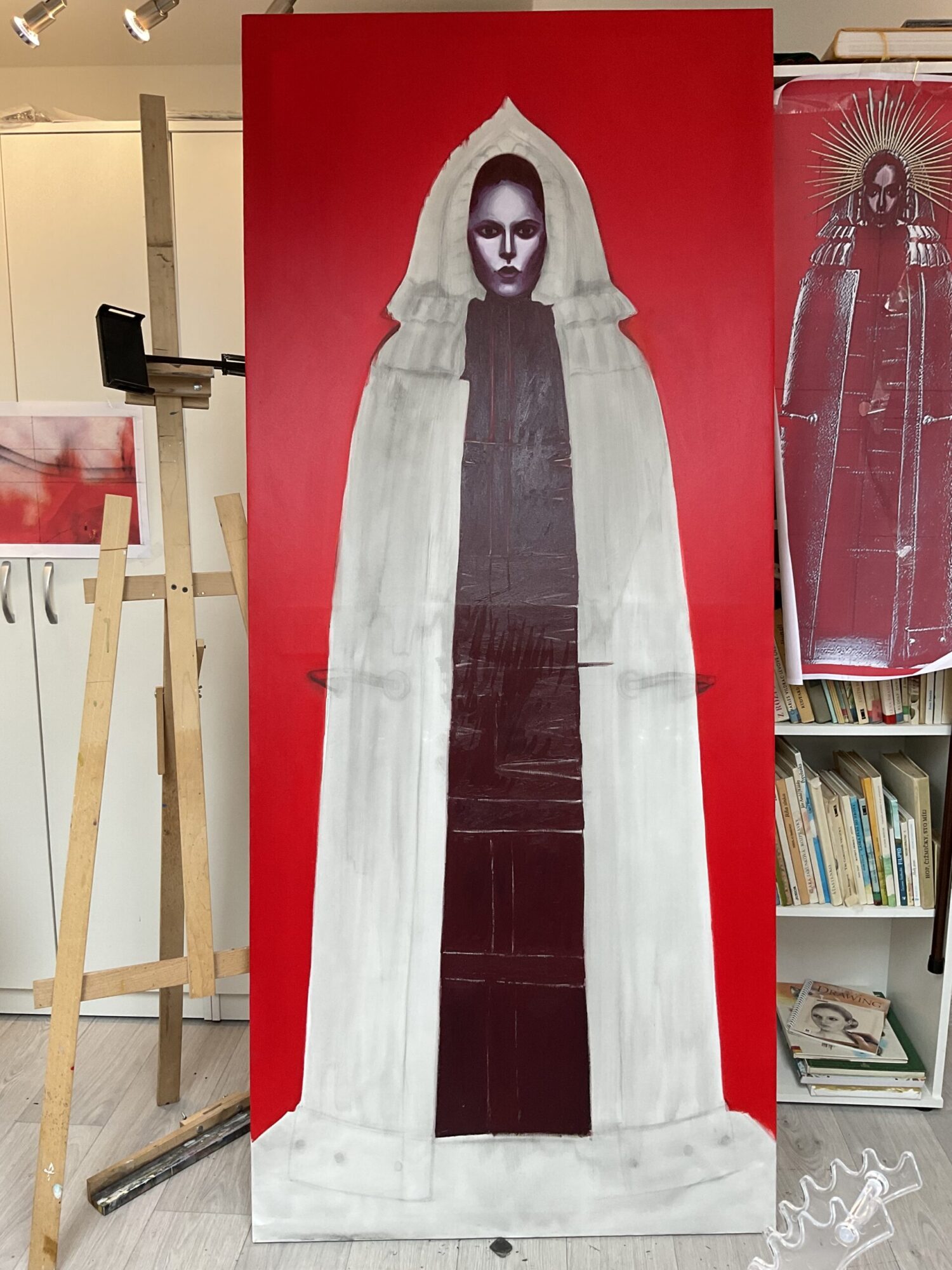
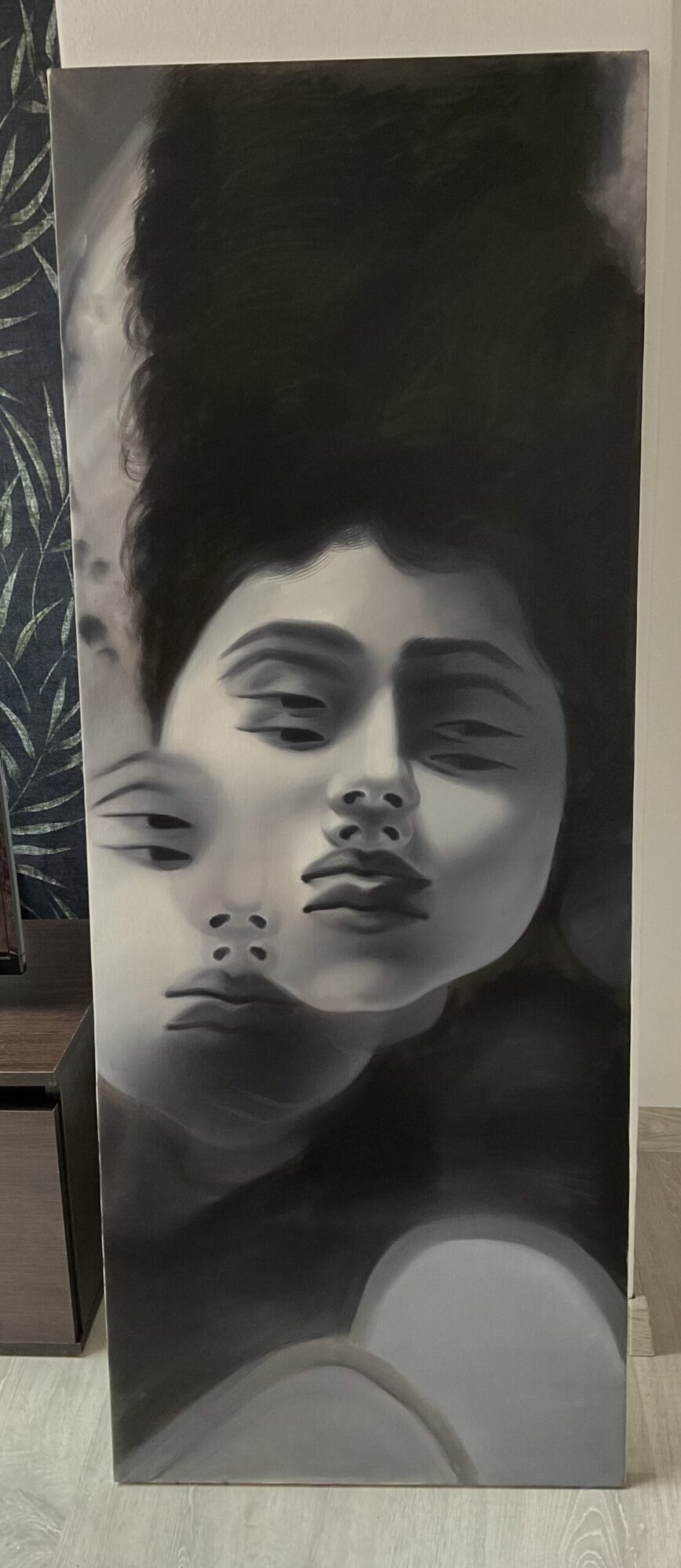
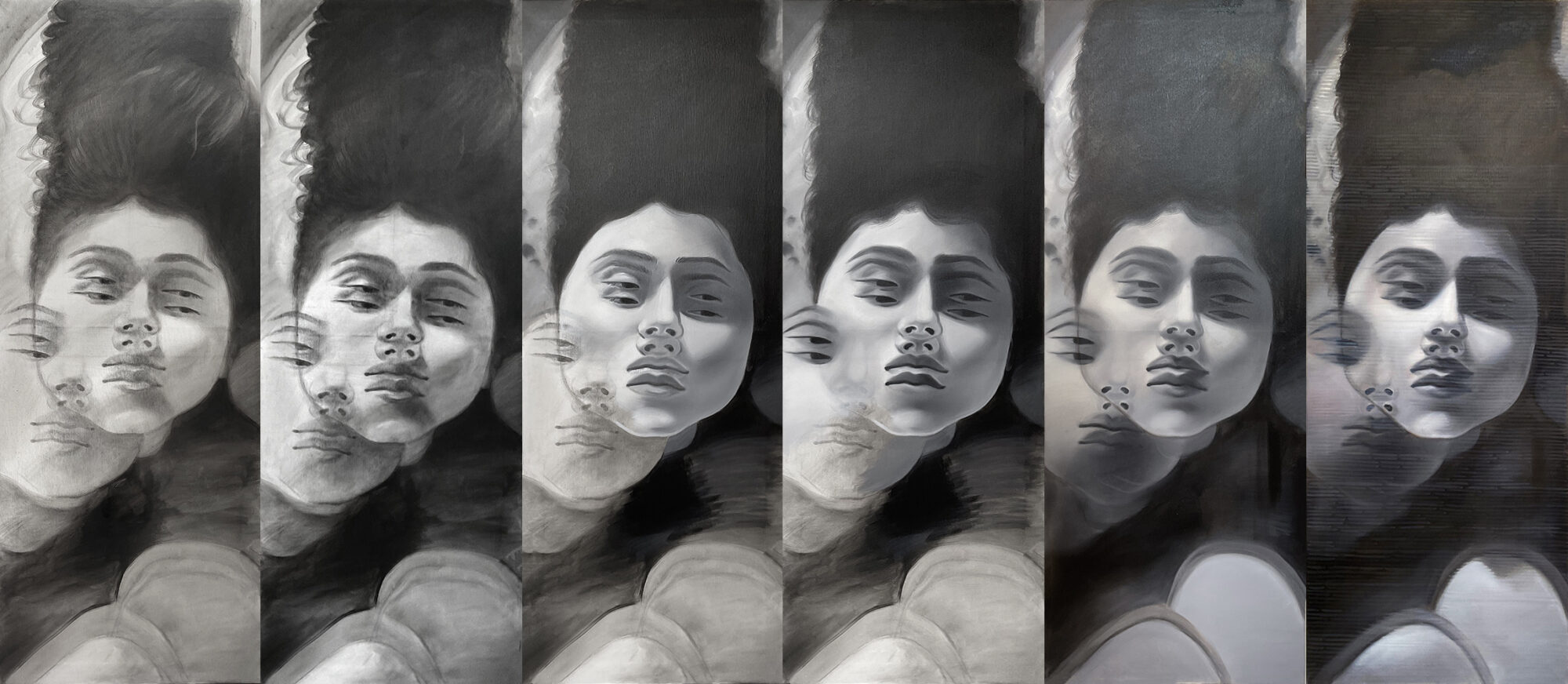
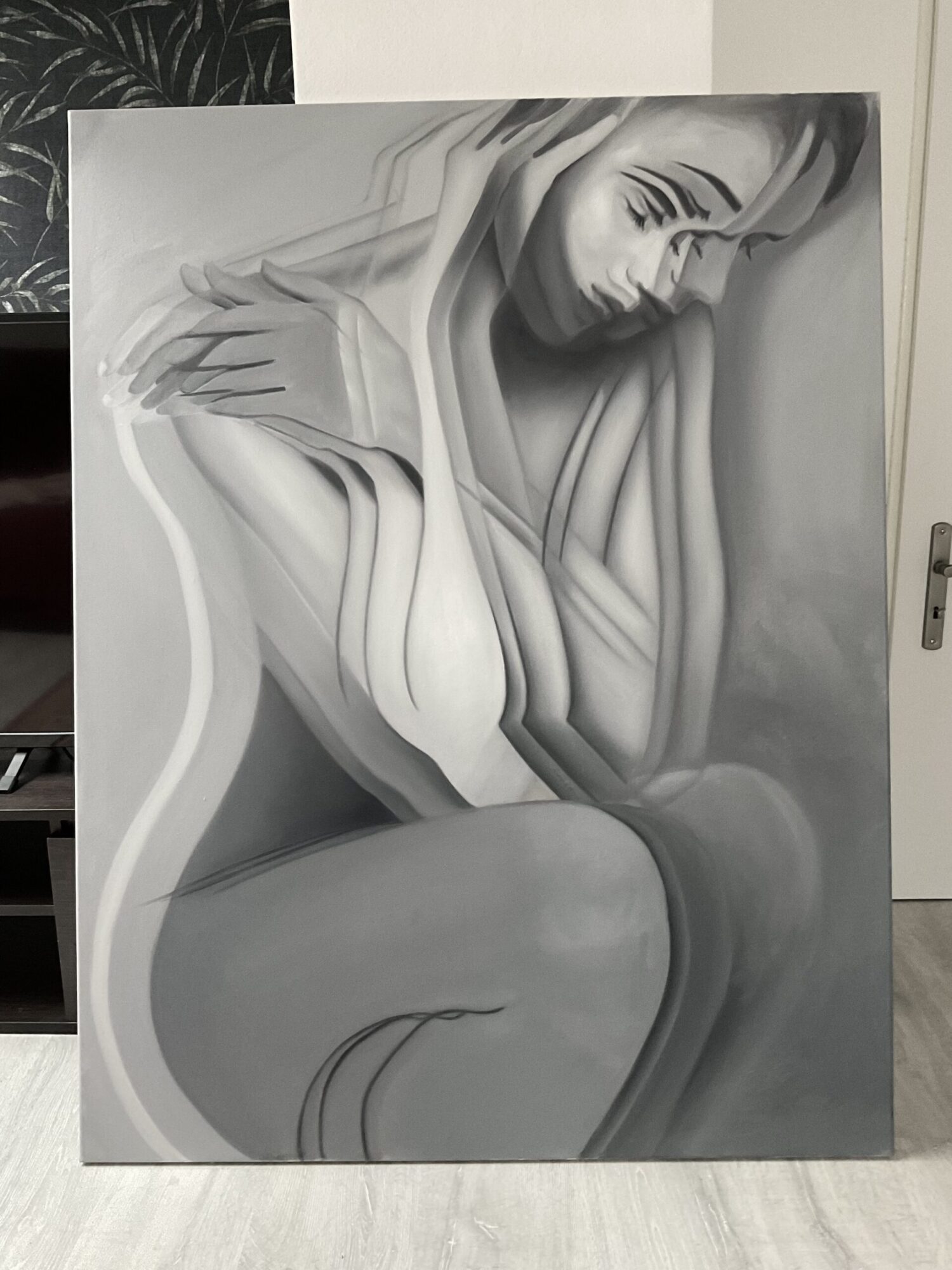
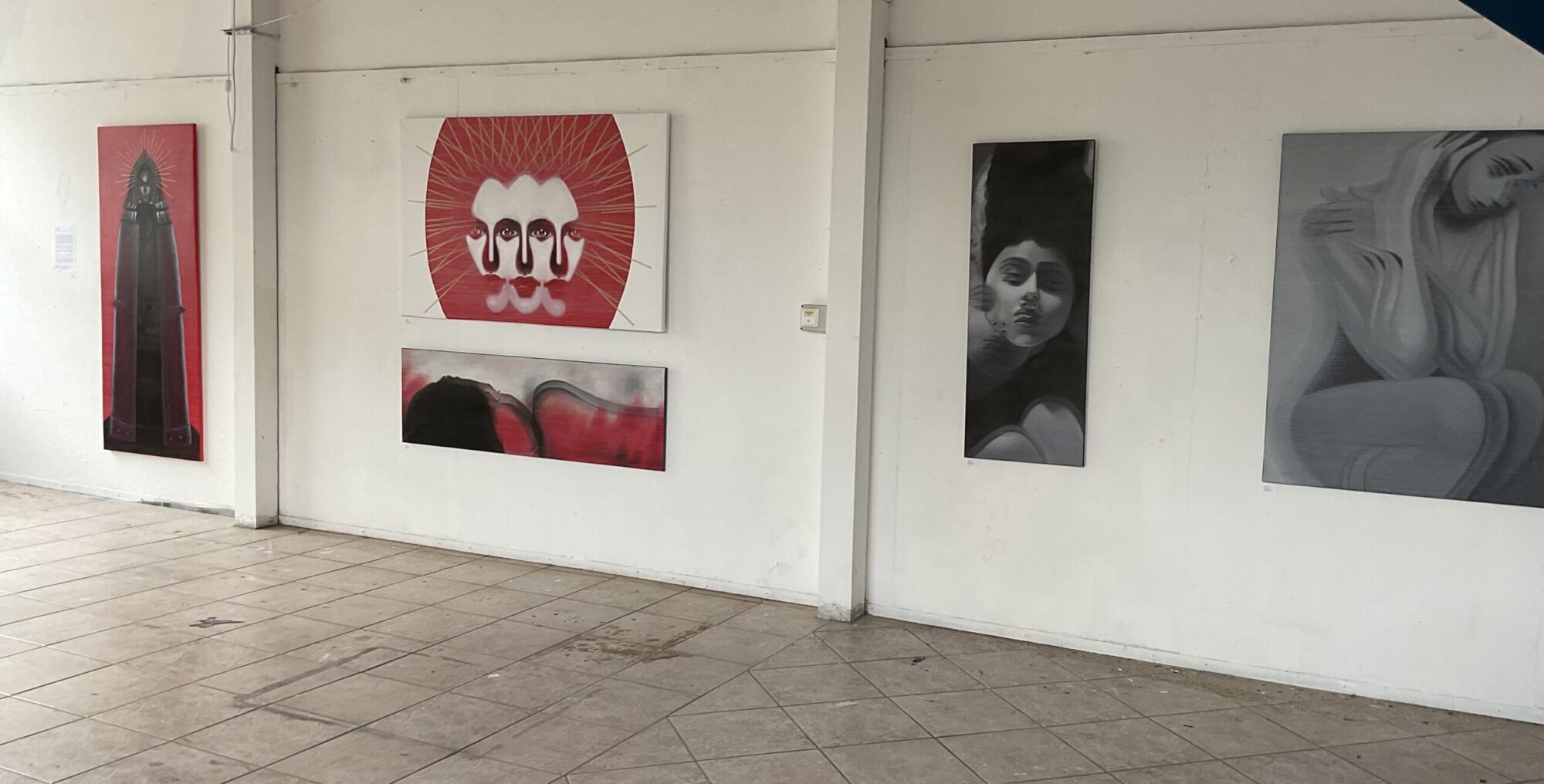
Untitled 1, oil on canvas, 190 × 82 cm, 2023; Untitled 2, oil on canvas, 160 × 100 cm, 2023; Untitled 3, oil on canvas, 160 × 49 cm, 2023; Untitled 4, oil on canvas, 130 × 50 cm, 2023; Untitled 5, oil on canvas, 130 × 100 cm, 2023
We live in an era characterised by an unprecedented level of visual information overload. The most frequent motif remains the female body, which becomes a dehumanised object shaping the perception of the ideal woman’s appearance – beautiful and passive. These depictions not only reflect current preferences regarding the desired appearance and behavioural stereotypes of the “perfect woman” but simultaneously contribute to their formation.
Dozens of graphically altered images of female bodies affect our psyche daily, resulting not only in comparison and lowered self-esteem among women and even very young girls, but also in psychological issues such as depression, eating disorders, or addiction to plastic surgery. Beauty standards lead society to overestimate the importance of appearance, fear the natural signs of ageing, push older women out of the public sphere, or discriminate based on looks, while also fostering increasing superficiality and consumerism, to which social media significantly contributes. Women are often depicted semi-naked or naked, as a result of which they are perceived by many men merely as sexual objects, and this perception subsequently transfers into real life.
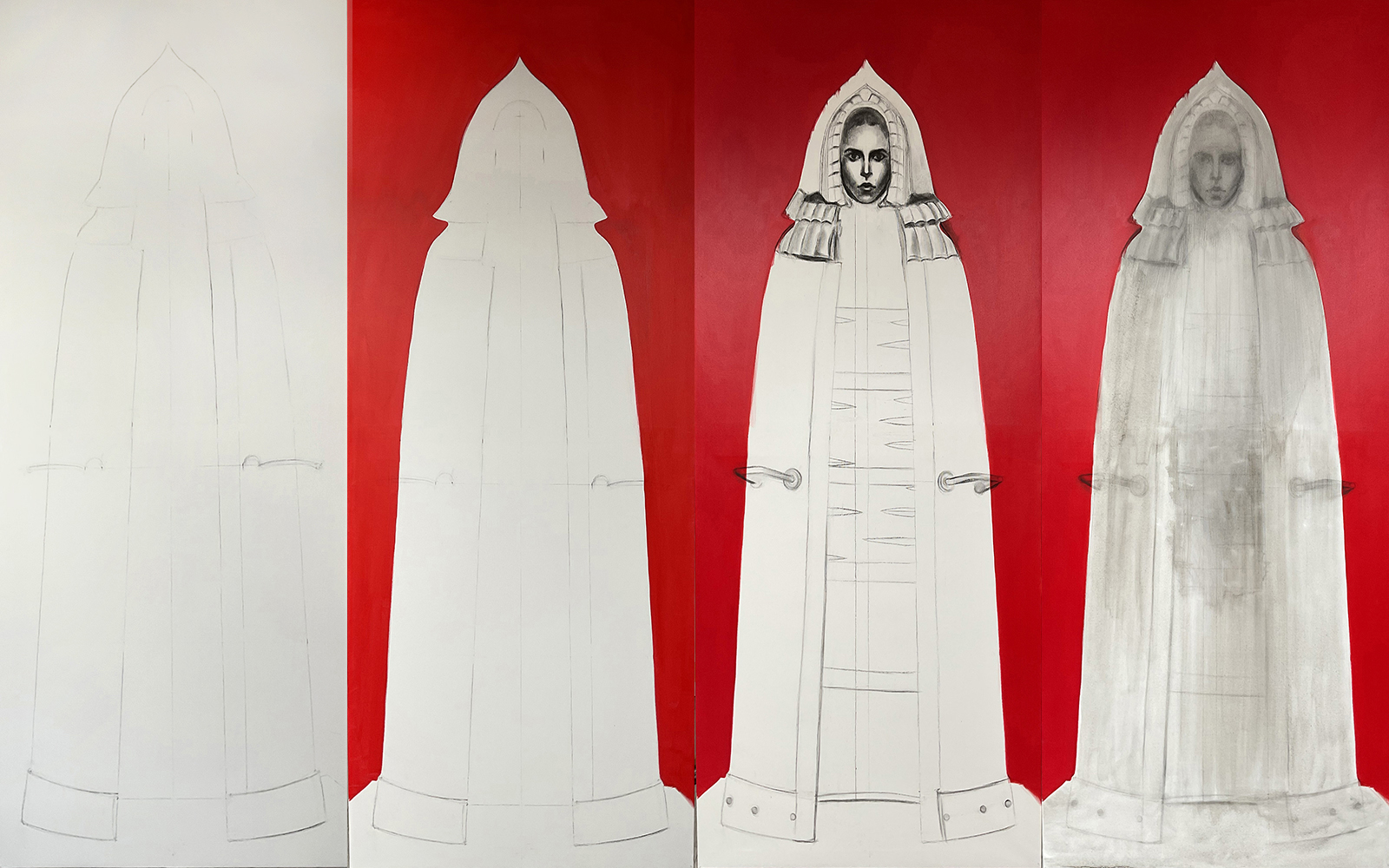
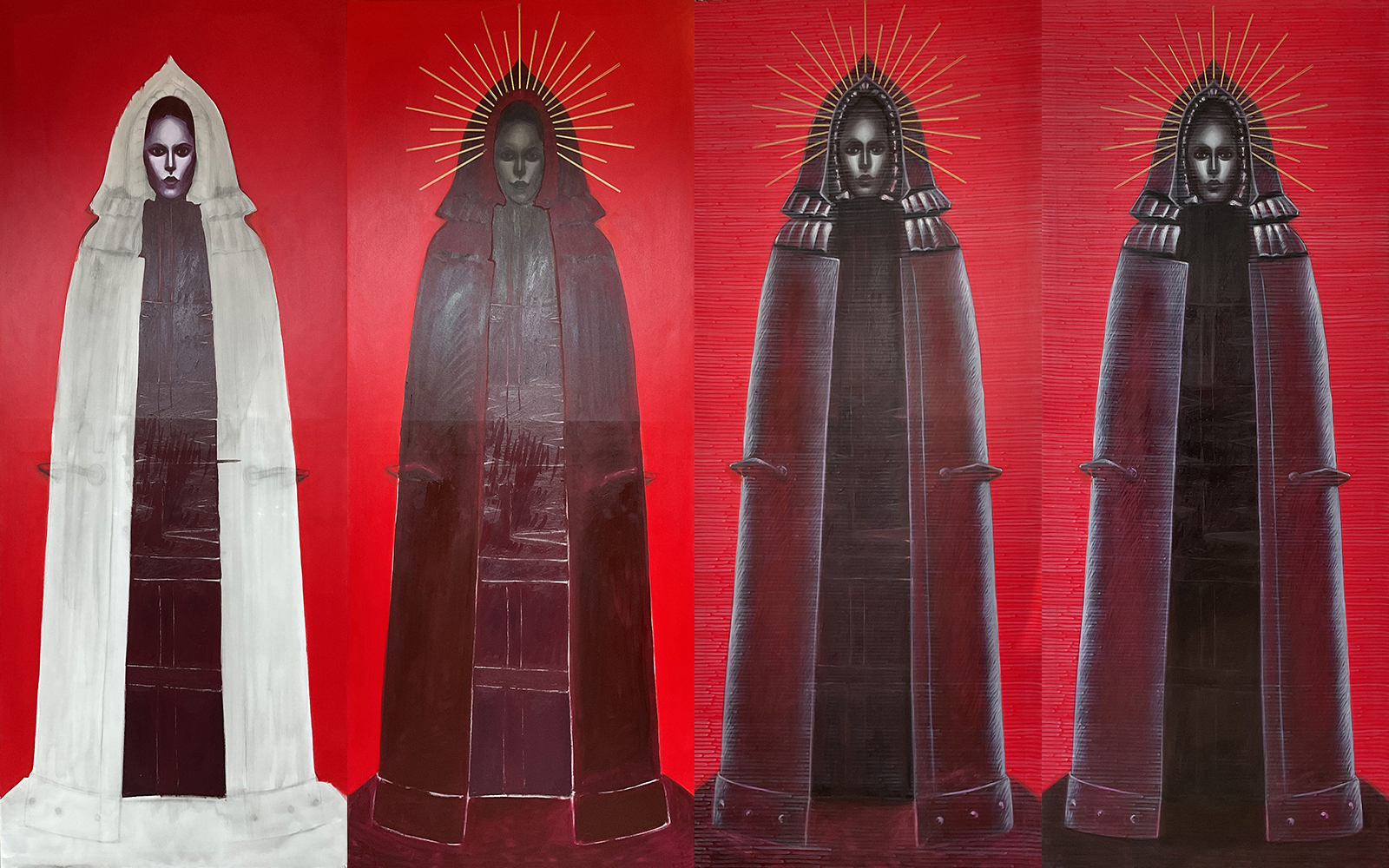
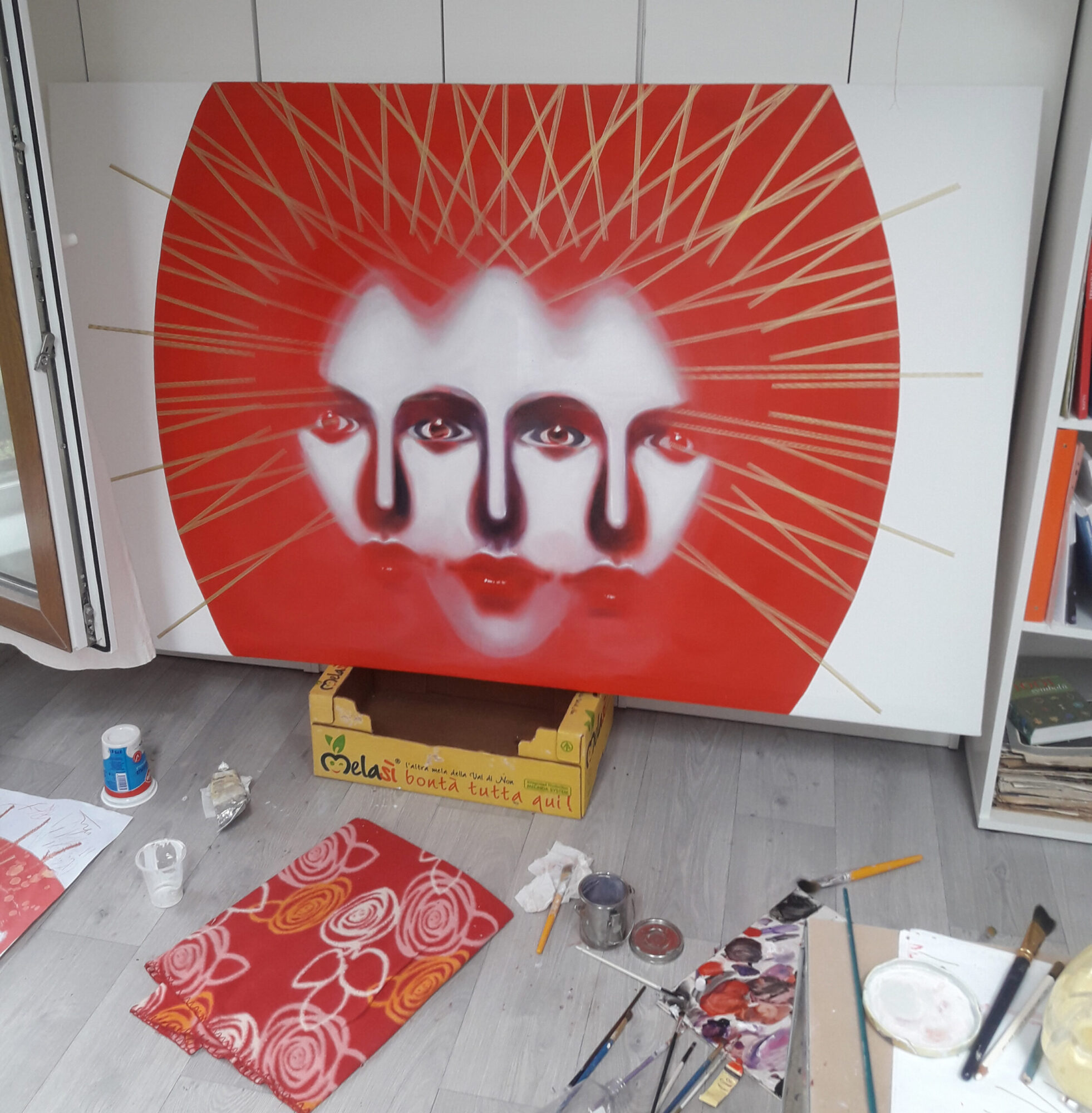
The primary inspiration for this series of paintings was the comparison of the beauty myth to the iron maiden in the book The Beauty Myth by Naomi Wolf. It is an alleged medieval torture device with an alluring exterior, inside of which hide sharp spikes that crush the victims (I explored this inspiration in the first painting). As a society, we tend to underestimate the beauty myth and its consequences because its form is aesthetically appealing – after all, how could looking at beautiful, smiling models be dangerous? Nevertheless, its consequences are often severe.
Sources: STURKEN, M. – CARTWRIGHT, L.: Studia vizuální kultury. Praha: Portál, s.r.o., 2009. 471 p. ISBN 978-80-7367-556-1; WOLF, N.: Mýtus krásy. 1st ed. Bratislava: Aspekt, 2000. 344 p. ISBN 80-85549-15-8
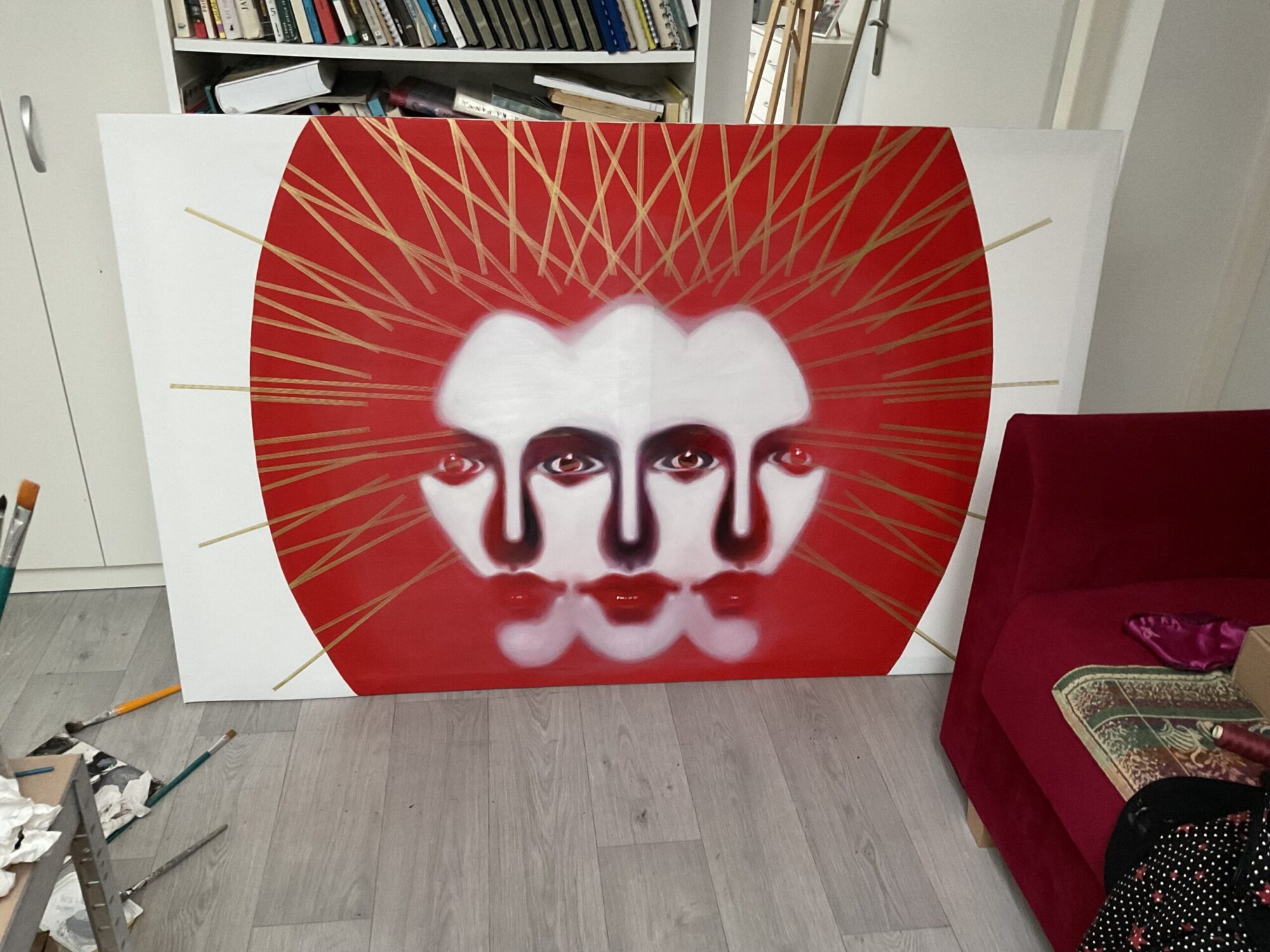
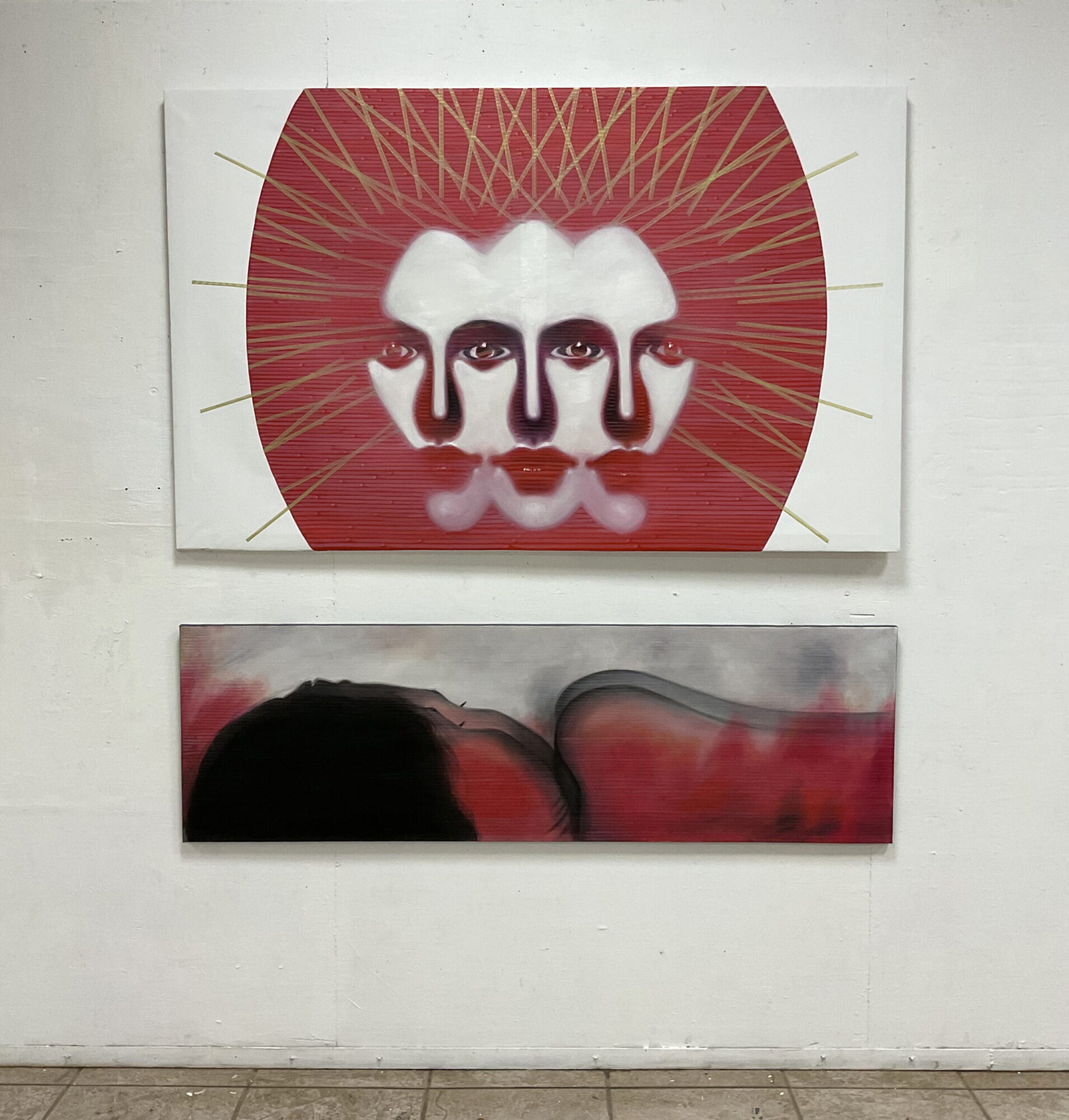
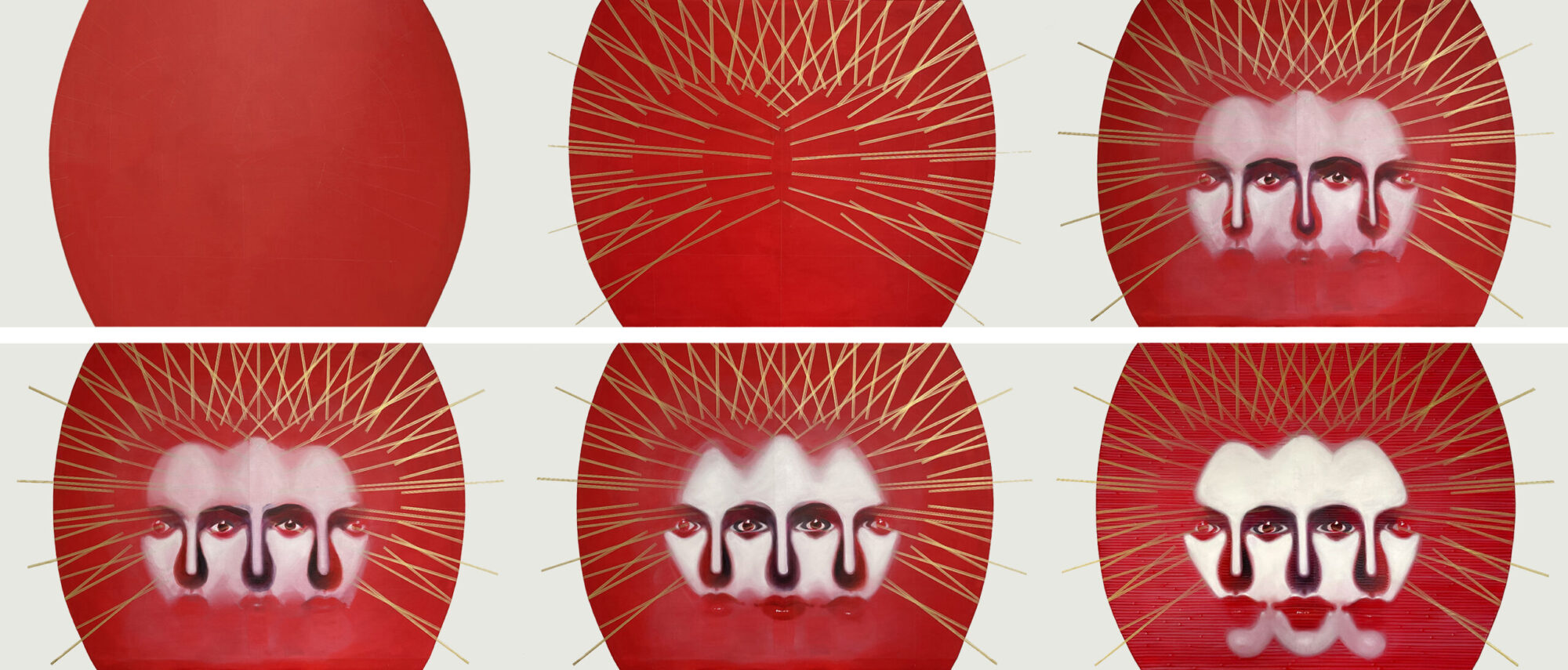
In the second painting, through multiplication, I wanted to point out the ubiquity of the beauty myth in the form of a flawless female face. It is complemented by a halo, referencing parallels between the worship of the beauty ideal and religious iconography.
With its colour palette and style, the painting also resembles posters of authoritarian politicians used as a means of building a cult of personality.
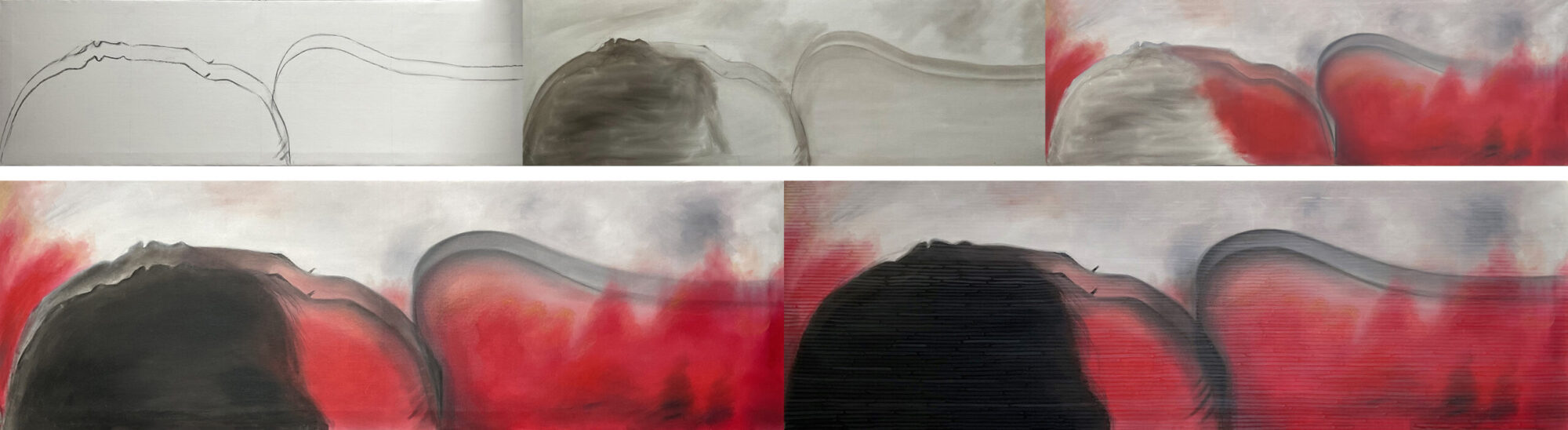
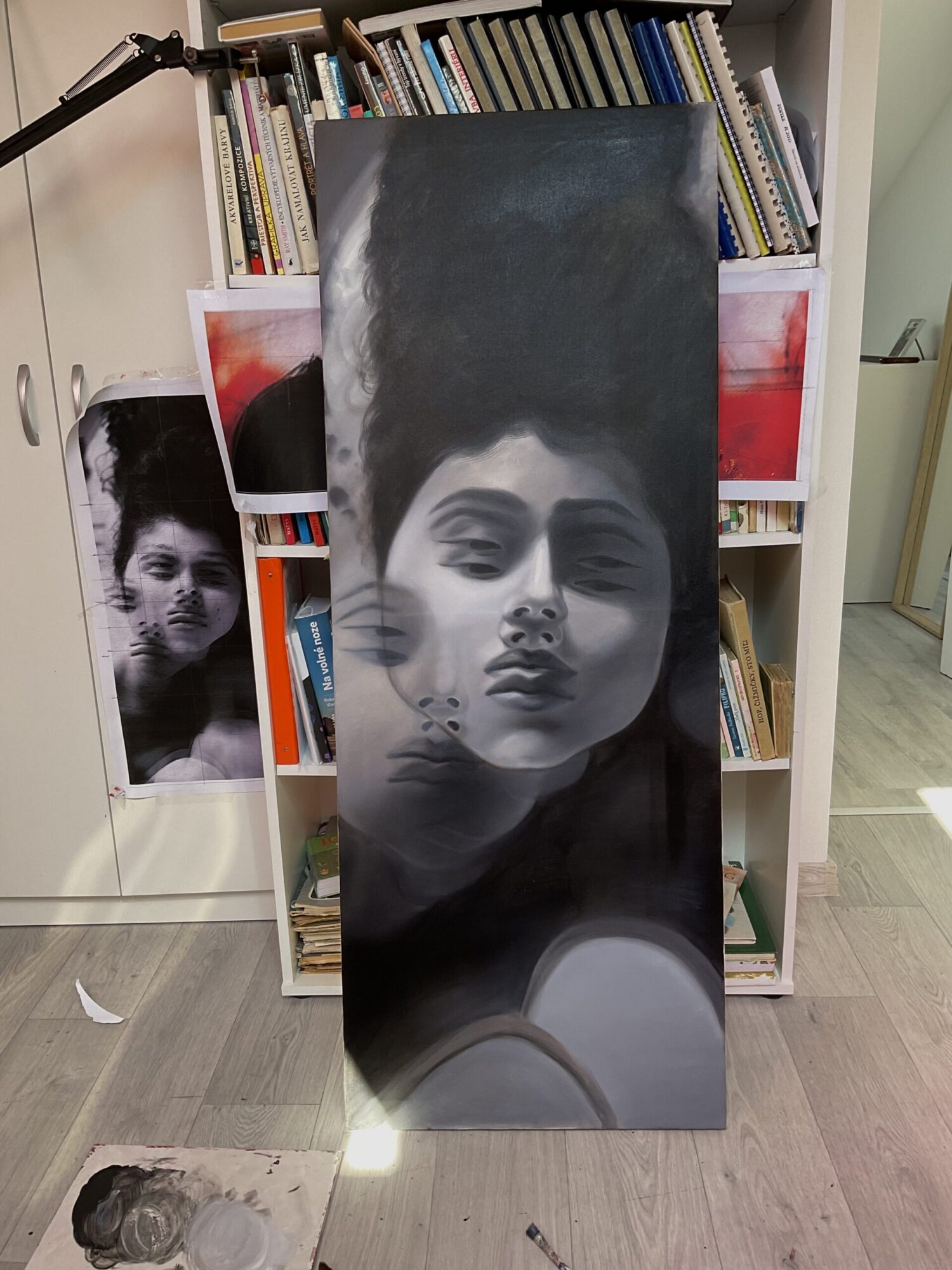
The remaining three paintings depict the victims of the beauty myth – their mental state, blurred physical and psychological boundaries, lack of focus, and the hiding of pain from those around them.
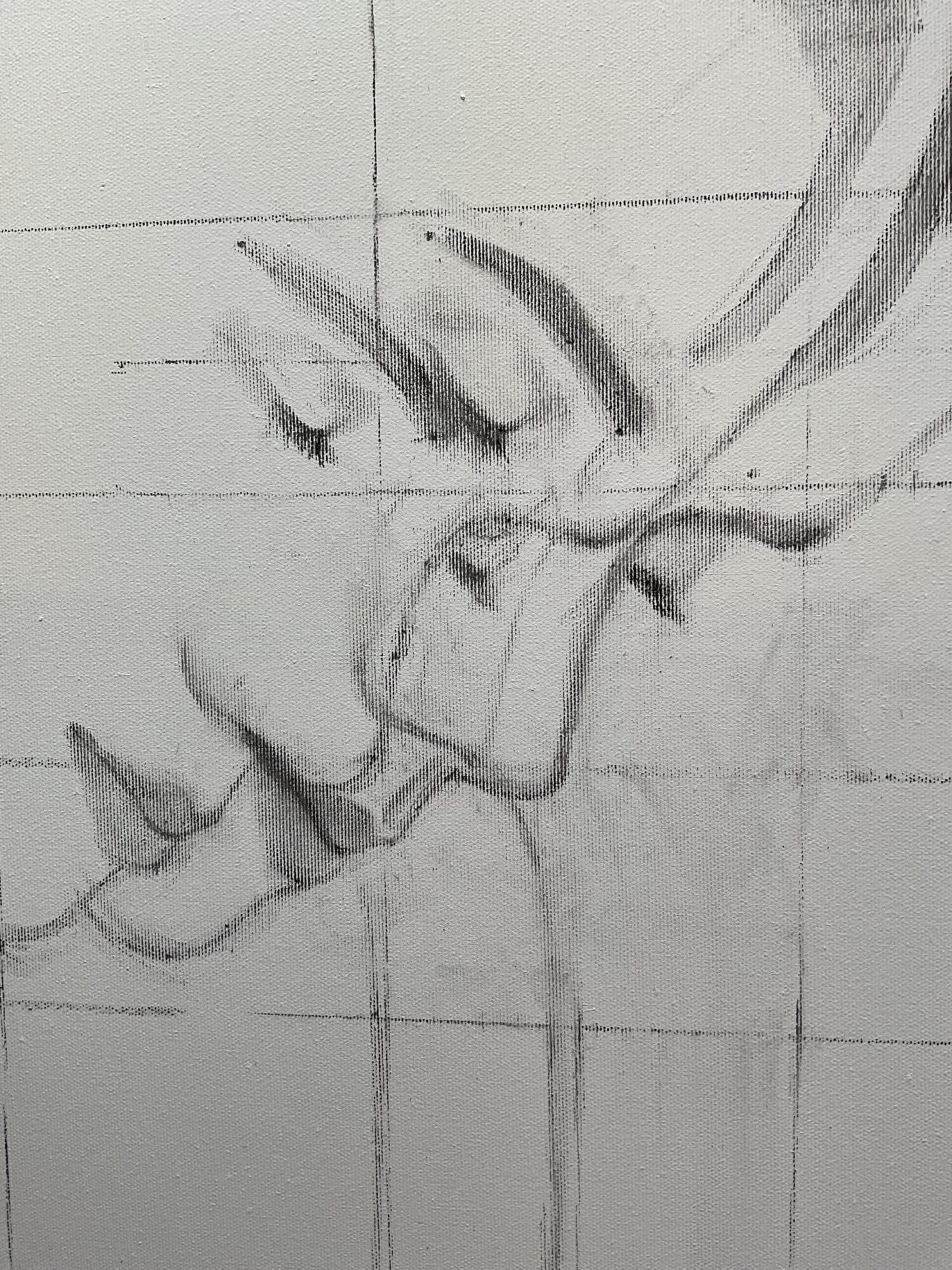
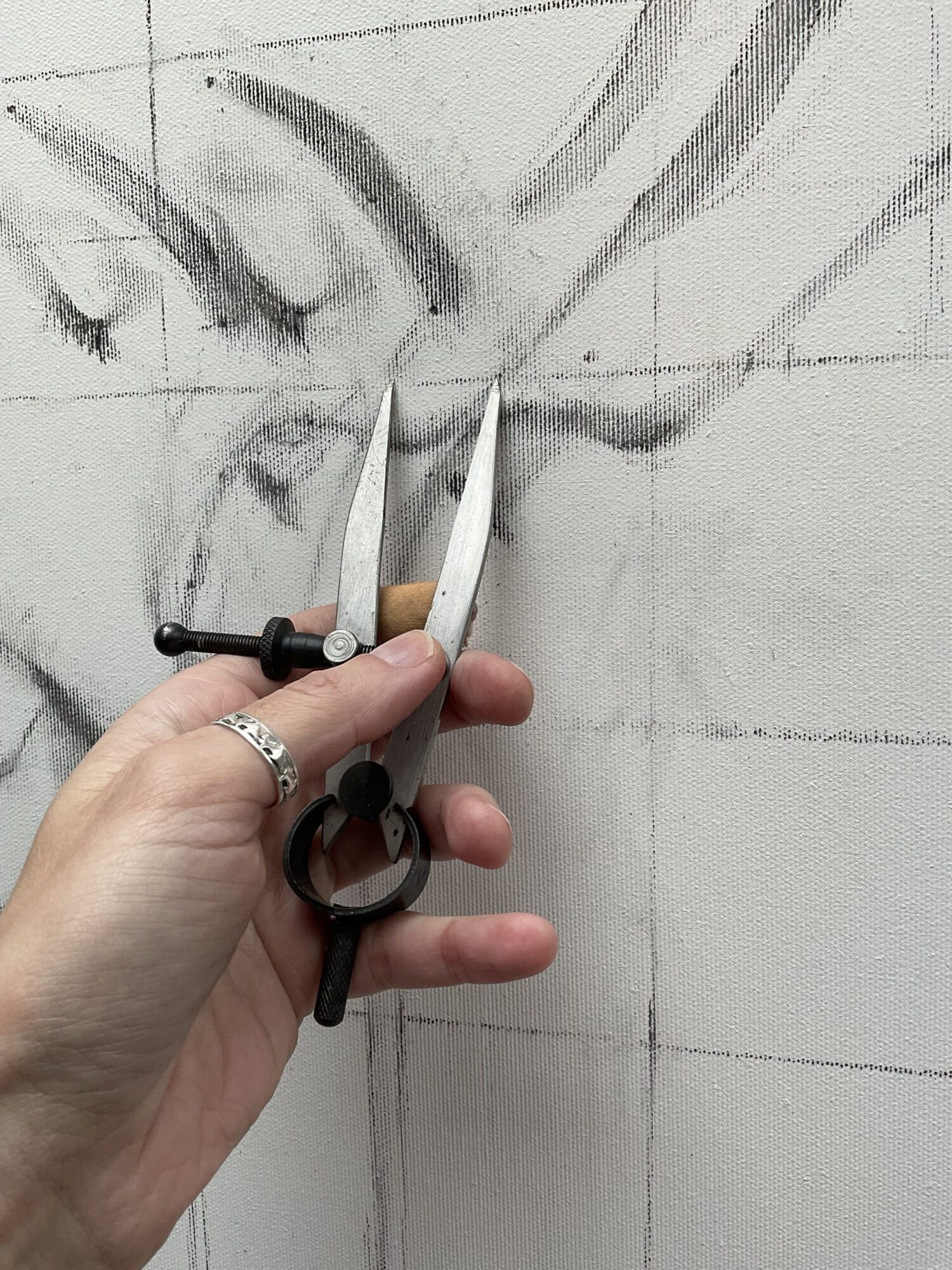
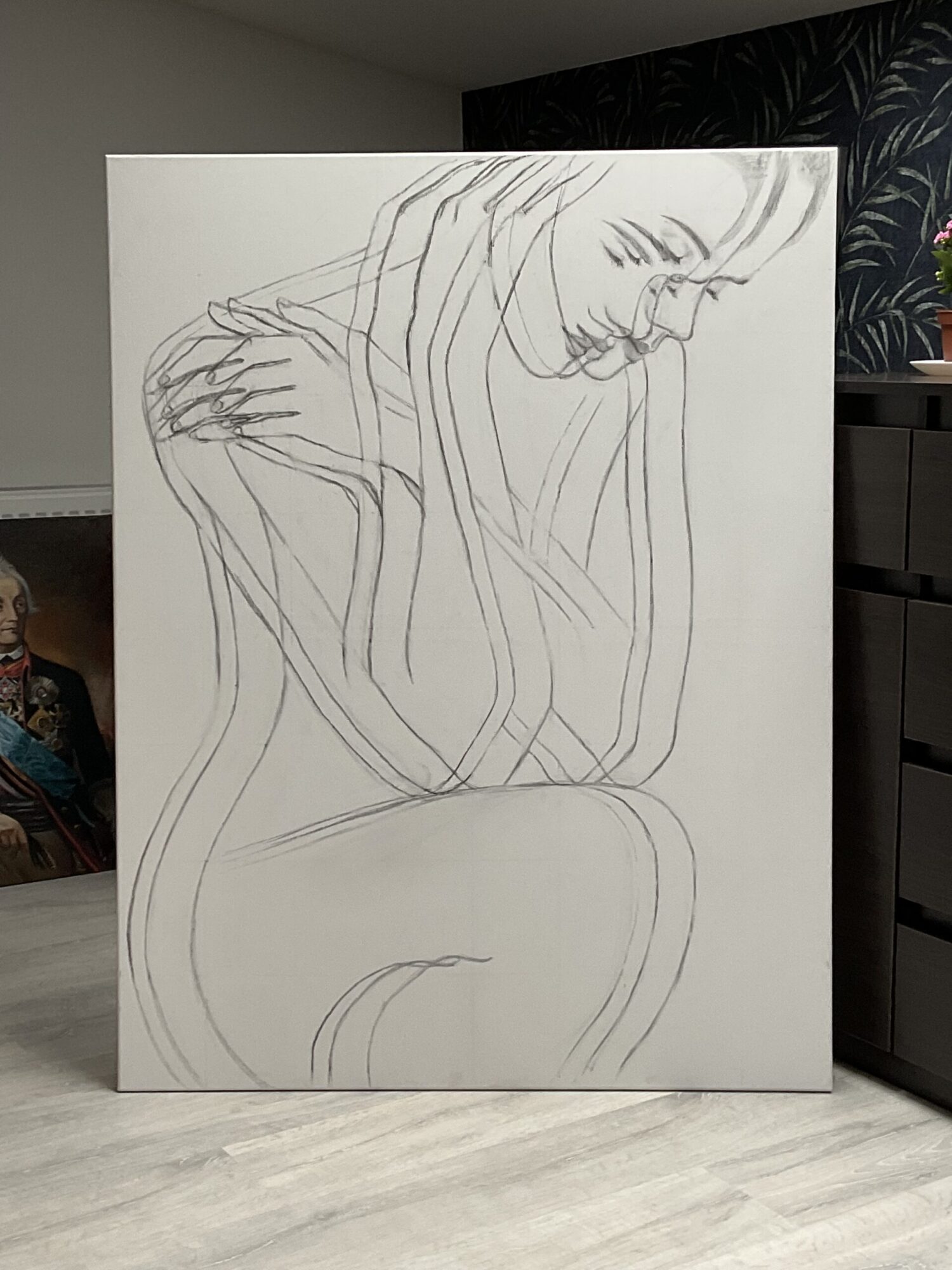
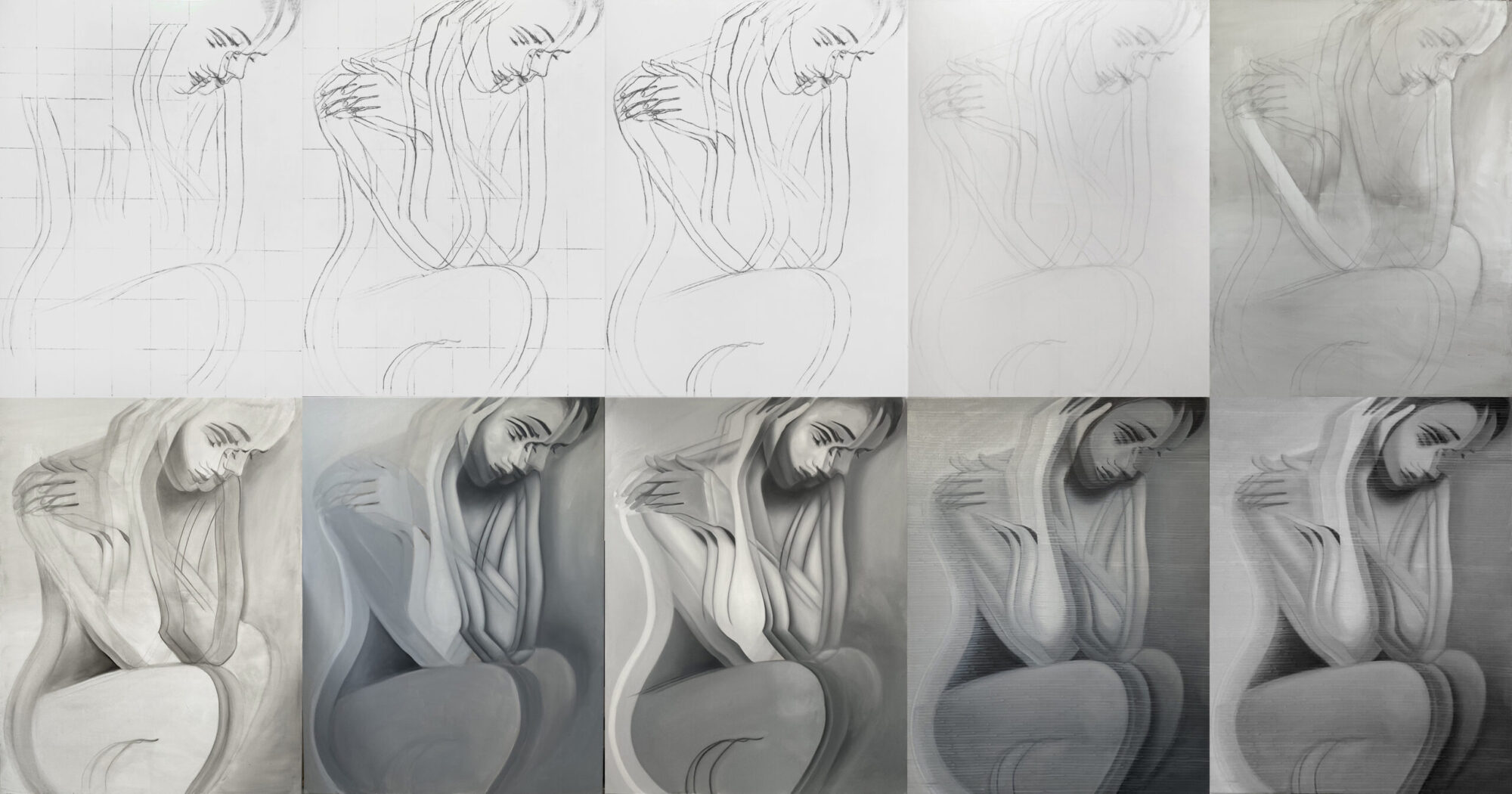
The paintings were created using the technique of layered oil painting on an acrylic underpainting. The substrate consists of cotton canvas on stretcher bars. The creation of the artworks was preceded by research into the topic. Subsequently, collages were created in graphic software, which served as a loose reference for painting the individual pieces.
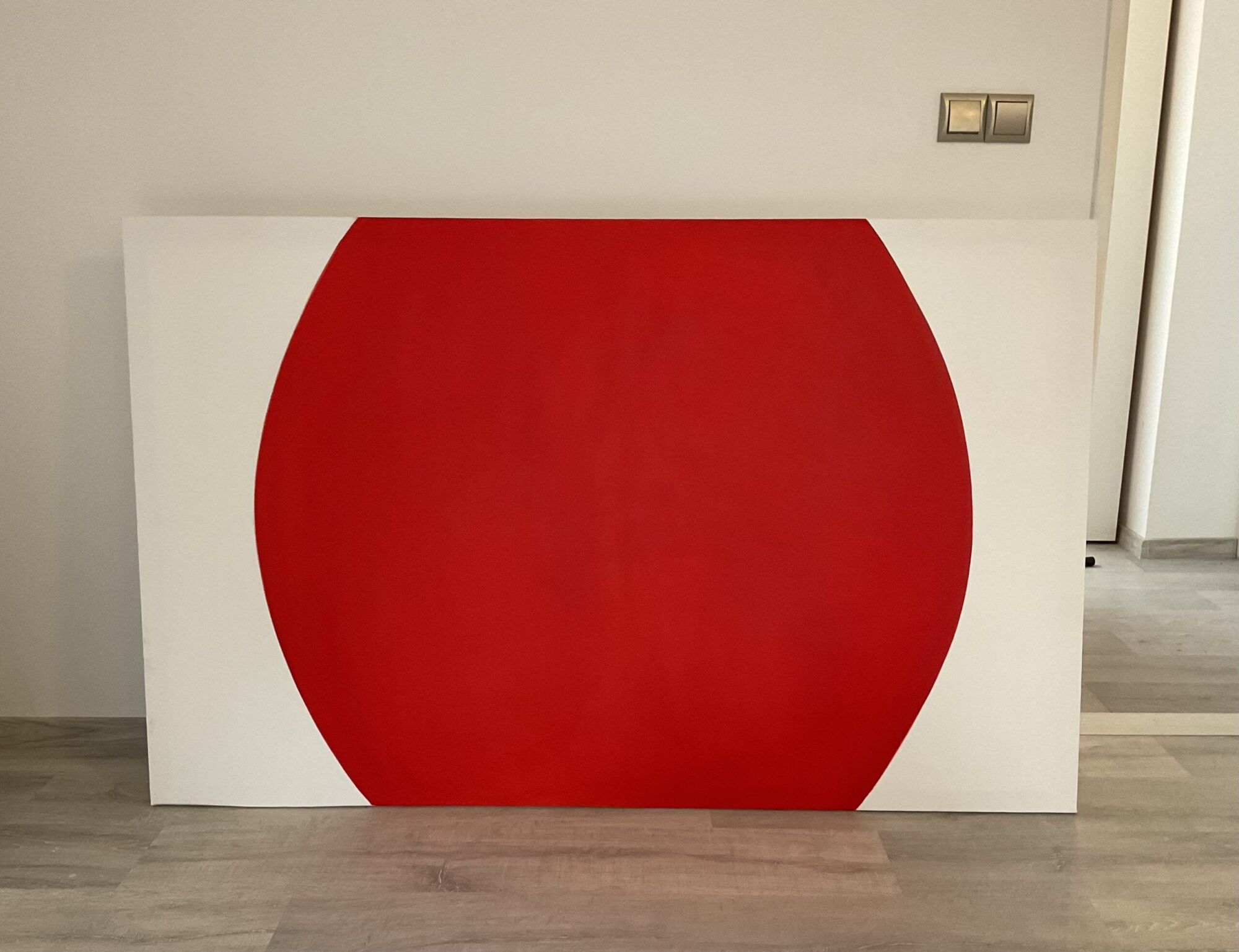
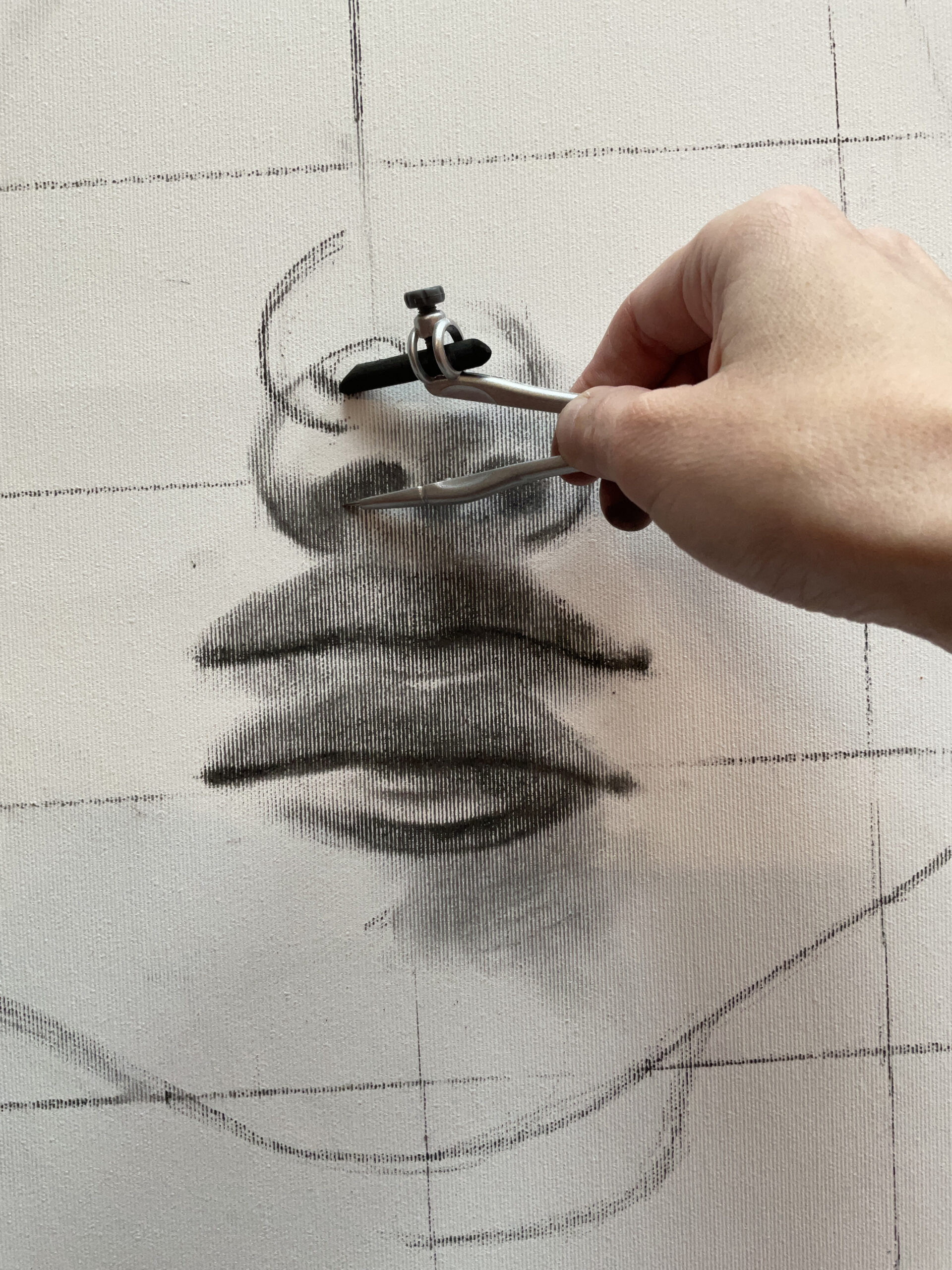
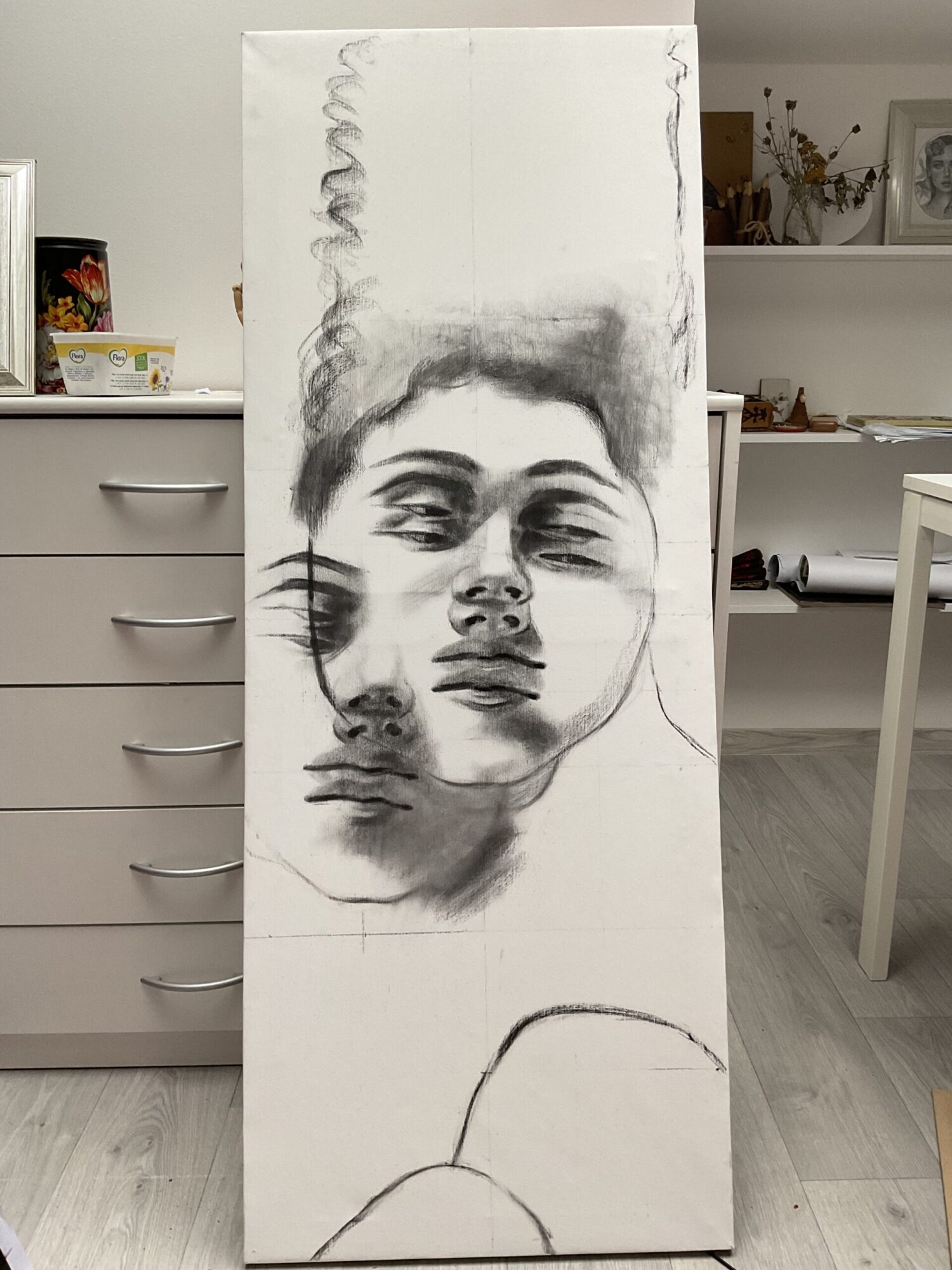
The motifs were initially sketched with charcoal. Below, you can view the documentation of the creative process.
Installation view of the painting series The Beauty Myth, Academy of Arts in Banská Bystrica, 2023
The painting series The Beauty Myth is the output of the artistic component of my bachelor’s thesis titled Engaged Painting: Feminism in Painting, with which I completed my bachelor’s degree at the Academy of Arts in Banská Bystrica in 2023. The thesis supervisor is doc. Mgr. art. Ján Triaška, ArtD., and the thesis consultant is Mgr. Ivana Moncoľová, PhD.