


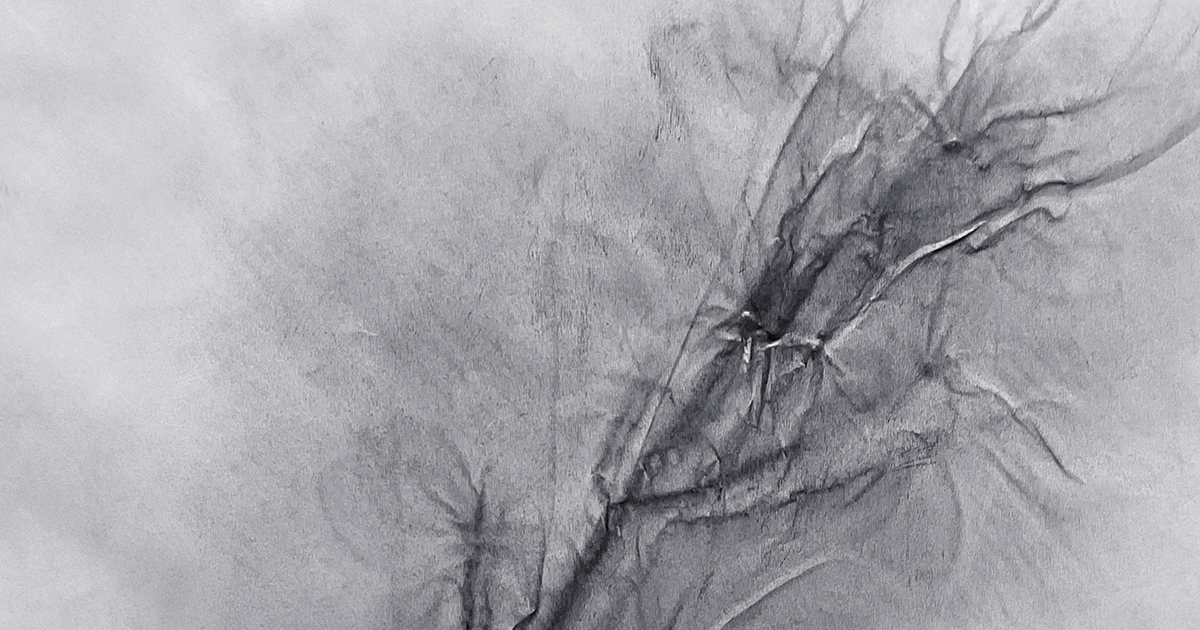
Souls, consciousness, the unconscious, and spirituality are among the areas that continue to raise more questions than answers even today.
The earliest conceptions of souls as immaterial entities that animate material bodies likely emerged as early as prehistoric times. They helped people answer fundamental questions of life – why they live, breathe, sleep, dream, become ill, or die – and cope with fear and uncertainty. Gradually, the first spiritual concepts developed – animatism, animism, magic, fetishism, totemism, and shamanism – in which supernatural forces, souls, and spirits play an important role.1,2
Animistic and animatistic beliefs, according to which these entities exist throughout both living and non-living nature, in human-made objects as well as celestial bodies, appear in various forms within these systems of thought. They have given rise to rich cultural traditions that continue to influence our contemporary understanding of the world.3,4,5 Throughout human history, these concepts have also been closely connected with artistic creation, from cave paintings to contemporary art.
In antiquity, thinkers began to explore the concept of the soul more systematically. In ancient Greece, several philosophers devoted themselves to reflecting on the soul, known as psyché, including Socrates,6,7 Plato,8,9 Aristotle,10,11 and later Plotinus.12
During the Middle Ages, the concept of the soul became a dominant theme of Christian doctrine, according to which souls are immortal and, after the death of the physical body, will live eternally in Heaven, Hell, or Purgatory.13 In art, the motif of the Last Judgment frequently appeared, serving a moralising function. During the Renaissance, there was also a return to ancient ideals in the understanding of the soul, which Renaissance thinkers connected with a humanistic view of the world.14
Later, philosophers such as René Descartes,15 Immanuel Kant,16 Friedrich Schelling,17 Georg Wilhelm Friedrich Hegel,18,19 and Friedrich Nietzsche20,21 also contributed to the development of knowledge in this field.
In 1871, Sir Edward Burnett Tylor, known as the father of anthropology, published Primitive Culture, in which he presented his theory of animism.22 The book had a significant influence not only on anthropology and the study of religion but also contributed to a growing interest in the cultures of Indigenous and non-European communities. An artistic movement known as Primitivism emerged, which was popularised mainly by Paul Gauguin, Pablo Picasso, and the German Expressionists.23,24,25,26
With the development of modern science, the range of disciplines analysing this subject expanded, and in some fields of knowledge the concept of the soul gradually began to be replaced by the concepts of consciousness and the unconscious. For artists, the unconscious is particularly fascinating, and its exploration is most closely associated with Sigmund Freud and Carl Gustav Jung.27 Art is deeply connected with the unconscious; artists immerse themselves in it during the creation of artworks, and viewers encounter it while perceiving them.28 In 1917, the first signs of Surrealism began to appear, in which unconscious influences played a key role.29
The inspiration for both the title and the theme of this series of articles was the essay Symbolism in the Visual Arts by Aniela Jaffé,30 which includes a subchapter entitled The Secret Soul of Things, as well as the autobiographical book The Secret Life of Salvador Dalí (an excerpt from which was published in the book Dalí by Cesáreo Rodríguez-Aguilera).31 These two texts connect art, animism, souls, symbolism, Surrealism, and the unconscious, and therefore the use of a combination of their titles seemed appropriate to me.
The title is also metaphorical – things are perceived differently in various parts of the world; in some cultures, they are considered to be alive, while in others, living beings may be perceived as things. The concept also connects spiritual ideas that attribute souls even to inanimate objects with the Surrealist movement, whose members worked with found objects. A thing can also be a vessel for the soul, or – if we understand it as matter – its opposite. However, physical works of art are also objects, which are often said to carry the artist’s soul within them.
This series will not consist merely of a dry presentation of facts. Together, we will search for answers to questions concerning human nature and connect seemingly unrelated ideas, discover art from different periods and parts of the world, and look at it from unusual perspectives. If you would like to explore these questions with me, join me next Monday…
Finally, I have a small riddle for you: can you discover which series the opening image belongs to and what technique was used to create it?
References
1. POPPER, K., The Logic of Scientific Discovery, 1959. In RUISEL, I., Psychológia vedy a vedeckého myslenia, 2016, p. 41.
2. VARGA, R., K problematike riešenia vzťahov človeka k prírode v historickej reflexii, 2013, p. 259.
3. TYLOR, E. B., Primitive Culture, 1888, p. 285.
4. FRAZER, J. G., The Golden Bough, 1894.
5. POPPER, K., The Logic of Scientific Discovery, 1959. In RUISEL, I., Psychológia vedy a vedeckého myslenia, 2016, p. 41.
6. Dějiny filosofie I: Sókratés. [online]. [accessed 18 December 2024]. Available at: https://is.muni.cz/do/rect/el/estud/ff/ps14/phil/web/tisk8.html
7. NECHUTOVÁ, J., Konsolace od antiky do středověku, 1991, p. 122.
8. AMBROZY, M., Niekoľko separovaných prepojení teológie a filozofie, 2016, p. 138.
9. STANČEK, Ľ., Čnosti, 2005, p. 16.
10. ROJKA, Ľ., Ľudská duša a zážitky blízkej smrti, 2015, p. 6.
11. JAKUBOVSKÁ, V., KOVALCHUK, N., Telo a duša, 2017, p. 8.
12. KARUL, R., Zvieracia a ľudská duša, čítanie Plotina, 2013, p. 91.
13. JAKUBOVSKÁ, V., KOVALCHUK, N., Telo a duša, 2017, p. 8.
14. Ibid., p. 8.
15. FRIDMANOVÁ, M., Alice Kliková : Mimo princip identity, 2008, p. 116.
16. JAKUBOVSKÁ, V., KOVALCHUK, N., Telo a duša, 2017, p. 11.
17. DÉMUTH, A., Friedrich Wilhelm Joseph Schelling : Filozofia umenia, 2008.
18. TOBIÁŠ, F., Hegel o dialektike živej prírody, 1977, p. 666.
19. YOVEL, Y., Mladý Hegel a duch judaizmu, 2012.
20. NIETZSCHE, F., O živote a umění, 1995.
21. NIETZSCHE, F., Soumrak model, 1995.
22. TYLOR, E. B., Primitive culture, 1888.
23. MAURÉRY, M., Štočky Paula Gauguina z Tahiti, 2021. [online]. [accessed 9 May 2025]. Available at:https://www.webumenia.sk/clanok/paul-gauguin-tahiti-stocky
24. MODIANO, L., How Much Does Picasso Owe to African Art?, 2024. [online]. [accessed 18 December 2024]. Available at:https://www.thecollector.com/picasso-and-african-art/
25. FITE-WASSILAK, CH., Objects That Speak for Themselves, 2018. [online]. [accessed 18 January 2025]. Available at: https://www.tate.org.uk/tate-etc/issue-42-spring-2018/chris-fite-wassilak-objects-speak-themselves
26. MURRELL, D., African Influences in Modern Art, 2008. [online]. [accessed 9 May 2025]. Available at: https://www.metmuseum.org/essays/african-influences-in-modern-art
27. PAUER, J., Je ešte možný spoločný svet?, 2003, p. 95.
28. WINN, S., What Happens to Us When Art Connects to the Unconscious, 2007. [online]. [accessed 22 May 2025]. Available at: https://www.sfgate.com/entertainment/article/What-happens-to-us-when-art-connects-to-the-2591269.php
29. STANKOVIANSKA, P., Surrealizmus na Slovensku, 2023. [online]. [accessed 6 May 2025]. Available at: https://www.webumenia.sk/cs/kolekcia/306
30. JAFFÉ, A., Symbolism in the Visual Arts, 1964.
31. AGUILERA, C. R., Salvador Dalí, 1991.
The complete bibliographic references for these sources can be found here.