


The Soul of the World
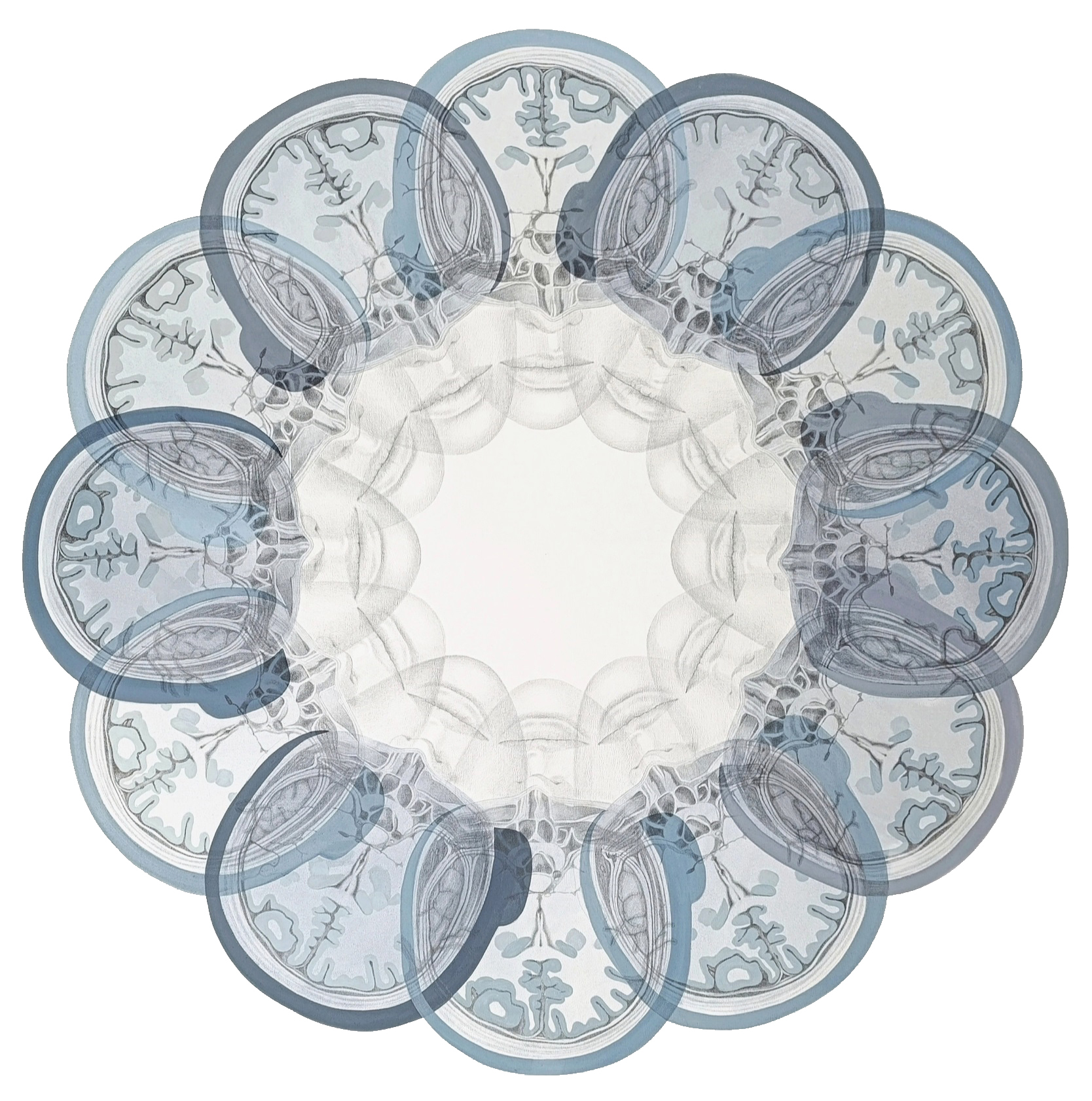
Untitled 1, gouache, watercolour and pencil on canvas, 120 × 120 cm, 2025
In the series The Soul of the World, I explore a web of invisible connections between humans, nature and the world on both conscious and unconscious levels.
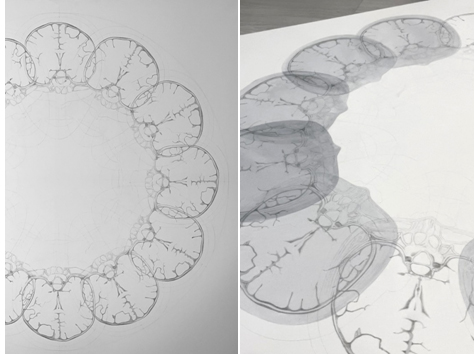
The first painting of the series represents the collective unconscious. The heads are arranged in a circle, symbolising its infinity and, at the same time, the immortality of the soul. Through their interweaving, I aimed to depict the mutual influence and interconnection among people through relationships and thoughts. The colour palette evokes the mystery that the unconscious carries within.
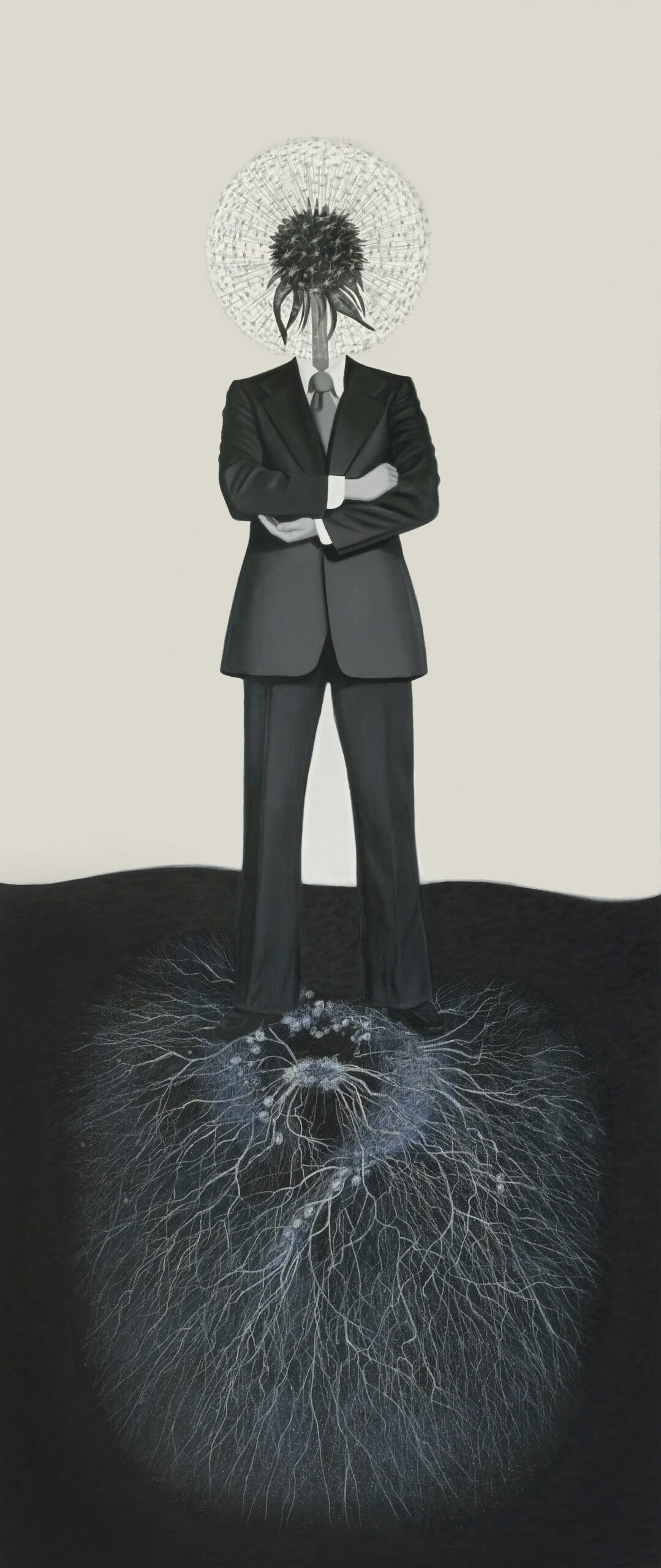
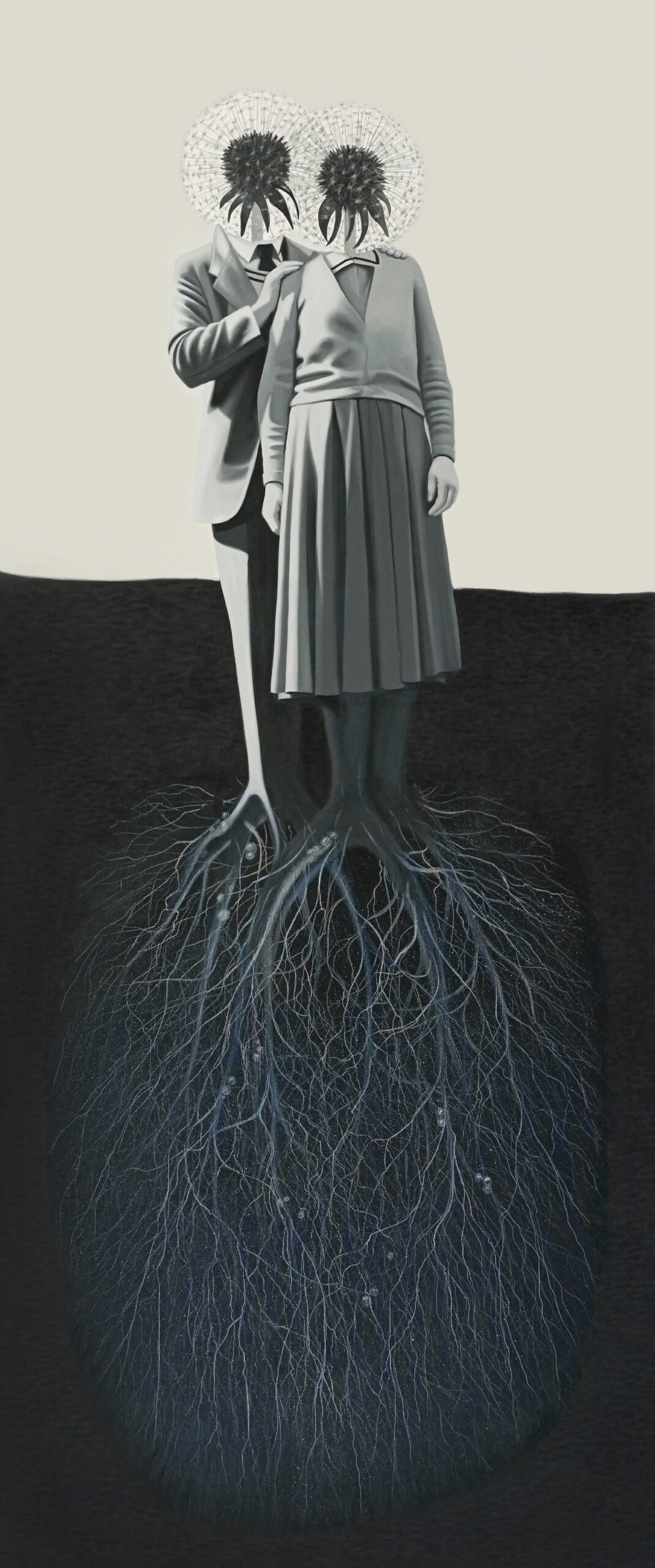
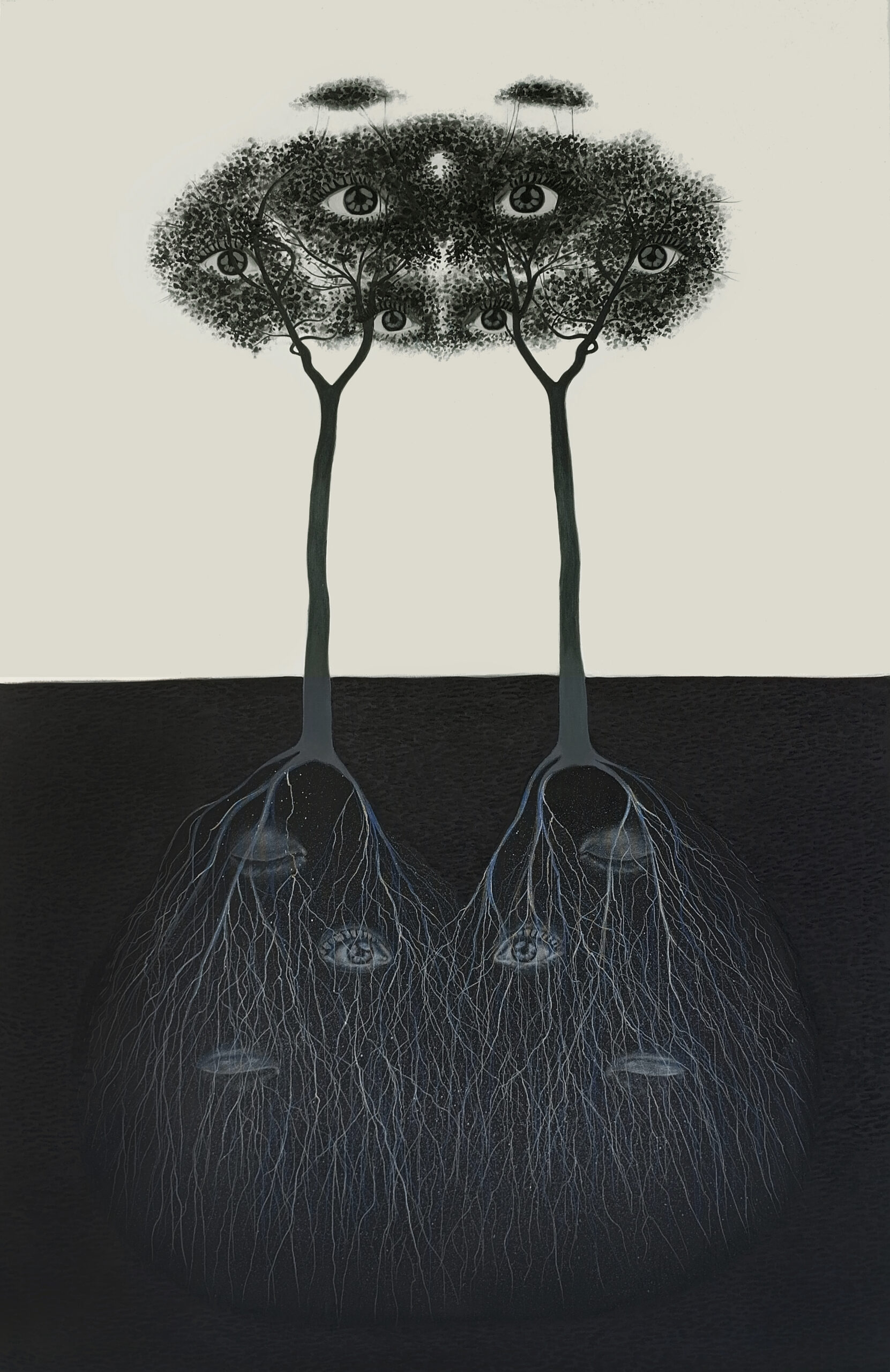
Untitled 2, oil, acrylic, gouache, pencil, pastel and coloured pencil on canvas, 200 × 85 cm, 2025; Untitled 3, oil, acrylic, gouache, pencil, pastel and coloured pencil on canvas, 200 × 85 cm, 2025; Untitled 4, oil, gouache, acrylic, pastel and coloured pencil on canvas, 200 × 130 cm, 2025
The second painting of The Soul of the World series carries multiple layers of meaning. It represents the conscious and the unconscious (depicted on canvas above and below the surface), and the soul symbolised by a dandelion clock expressing its fragility and potential to spread thoughts; the material and immaterial essence of human beings, as well as personal development according to Carl Gustav Jung. He maintained that the only way to achieve wholeness is by linking the conscious and the unconscious through bringing unconscious contents to light. He termed this process individuation. If one cannot plunge into the depths of one’s inner self, true authenticity remains unreached, the boundary between one’s own dreams and the expectations of others becomes blurred, and the individual remains trapped within the ego, severed from their true essence.
The universe of one’s own unconscious can be explored through deep conversations, self-reflection, dream analysis, reflective writing, listening to music, perceiving artworks, reading books, meditation, spending time in nature, or during spiritual experiences.
The roots symbolise the unconscious hidden beneath the surface—the source from which our personality grows with all its specificities. It is a subtle, complex, and sensitive system that responds to every impulse from the environment. At the same time, the artwork alludes to the roots of humanity—history and the collective unconscious. My intention was to capture the dichotomy between the material component, represented by a suit, and the immaterial one, symbolised by the roots and the dandelion. In contrast to the garment painted in oils, these are drawn in pencil and pastel, which highlights their immaterial character.
The third painting in this series, in addition to the meanings mentioned above, represents relationships arising deep within the unconscious, along with their fragility and intimacy. It symbolises the conscious and unconscious connection between people and the resulting vulnerability, as well as mutual influence and the exchange of thoughts.
The fourth canvas depicts a being that bears human and plant characteristics, as well as less obvious animal traits (the crown of the tree resembles a swarm of bees or cheetah spots). It symbolises the soul of the world, the interconnectedness of all living beings on Earth, including humans. Research shows that consciousness is not exclusive to humans and animals—plants possess it too, communicating with each other in various ways, for instance, through their roots. On another level of interpretation, the painting again refers to personal development—the Jungian wholeness towards which an individual moves by making unconscious contents conscious. This psychological process is visually represented by the opening of the eyes. At the same time, the tree is a symbol of the Self archetype, which represents our inner voice. It guides us toward our authentic life path and helps us distinguish it from the noise of others’ advice, wishes, dreams, or demands that do not resonate with us upon deeper examination. The circular form created by the trees symbolises the infinity and immortality of souls, as well as wholeness. Awakening can also mean becoming aware of the need for greater sensitivity towards perceiving nature and the beings within it.
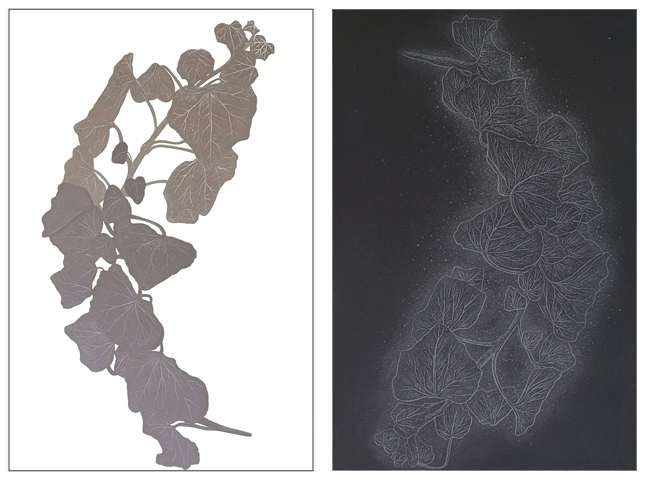
Untitled 5, gouache and acrylic on canvas, 150 × 100 cm, 2025; Untitled 6, gouache, pastel and coloured pencil on canvas, 150 × 100 cm, 2025
The remaining two paintings represent the body and soul of the plant. I expressed its material aspect through a more substantial artistic technique—gouache painting—while I depicted the soul more ethereally, using pastel and coloured pencil drawing. The execution was preceded by artistic research; I experimented with the frottage technique, the bleeding of gouache, and digital photography, attempting to transfer the accidentally occurring effects into the drawing. Together, the ivy vines on the canvases imply a circle, which alludes to the endless cycle of nature, the connection between reality and the spiritual, and the search for balance between these worlds.
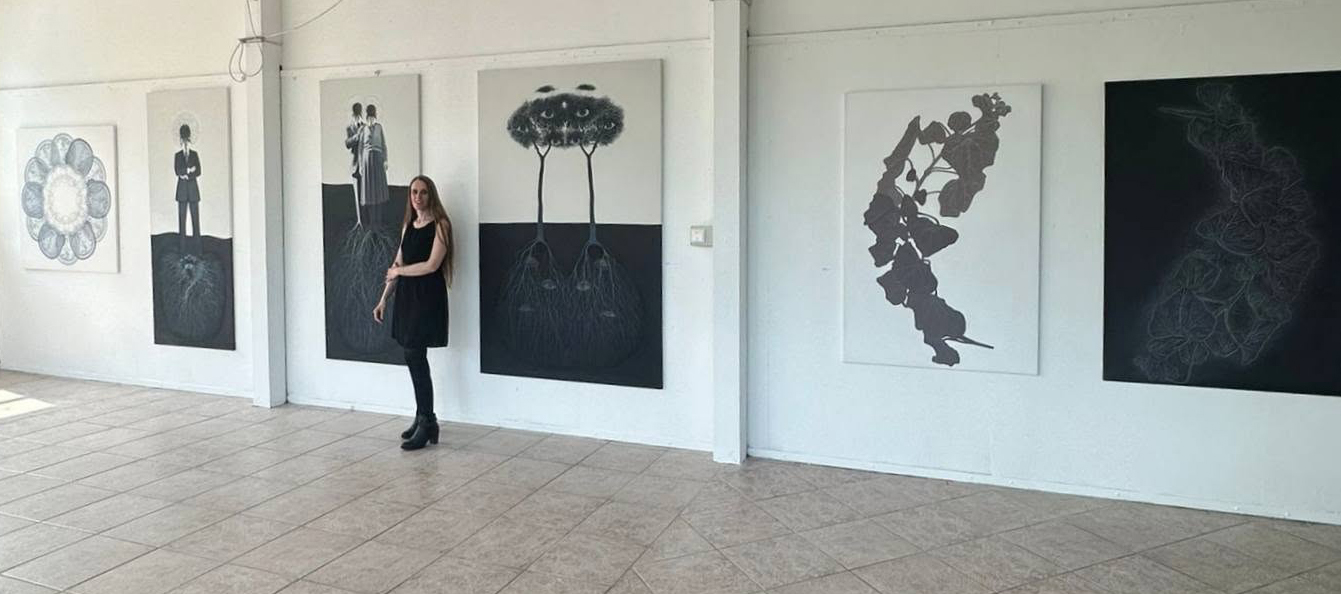
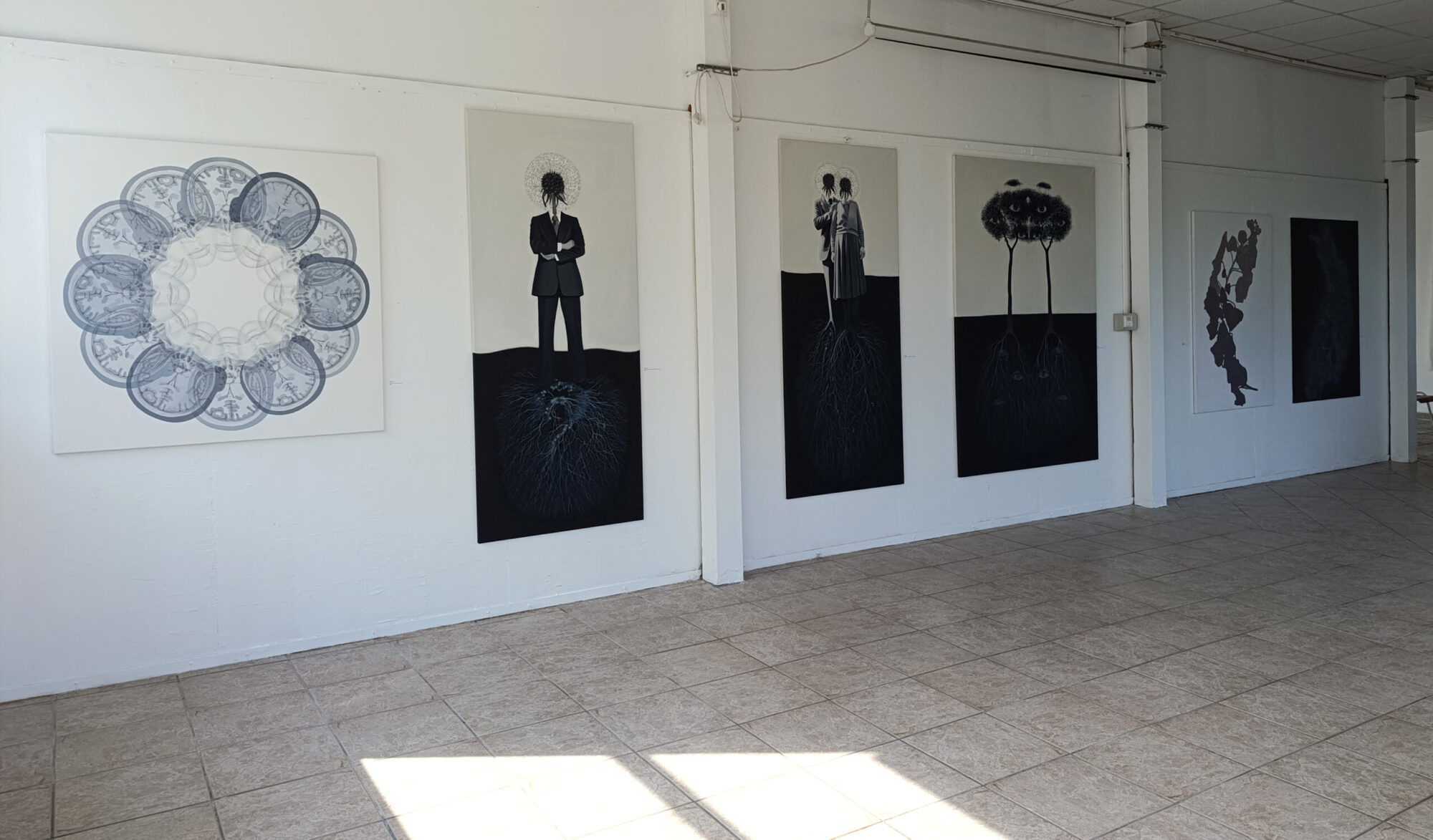
Installation view of The Soul of the World painting series, Academy of Arts in Banská Bystrica, 2025
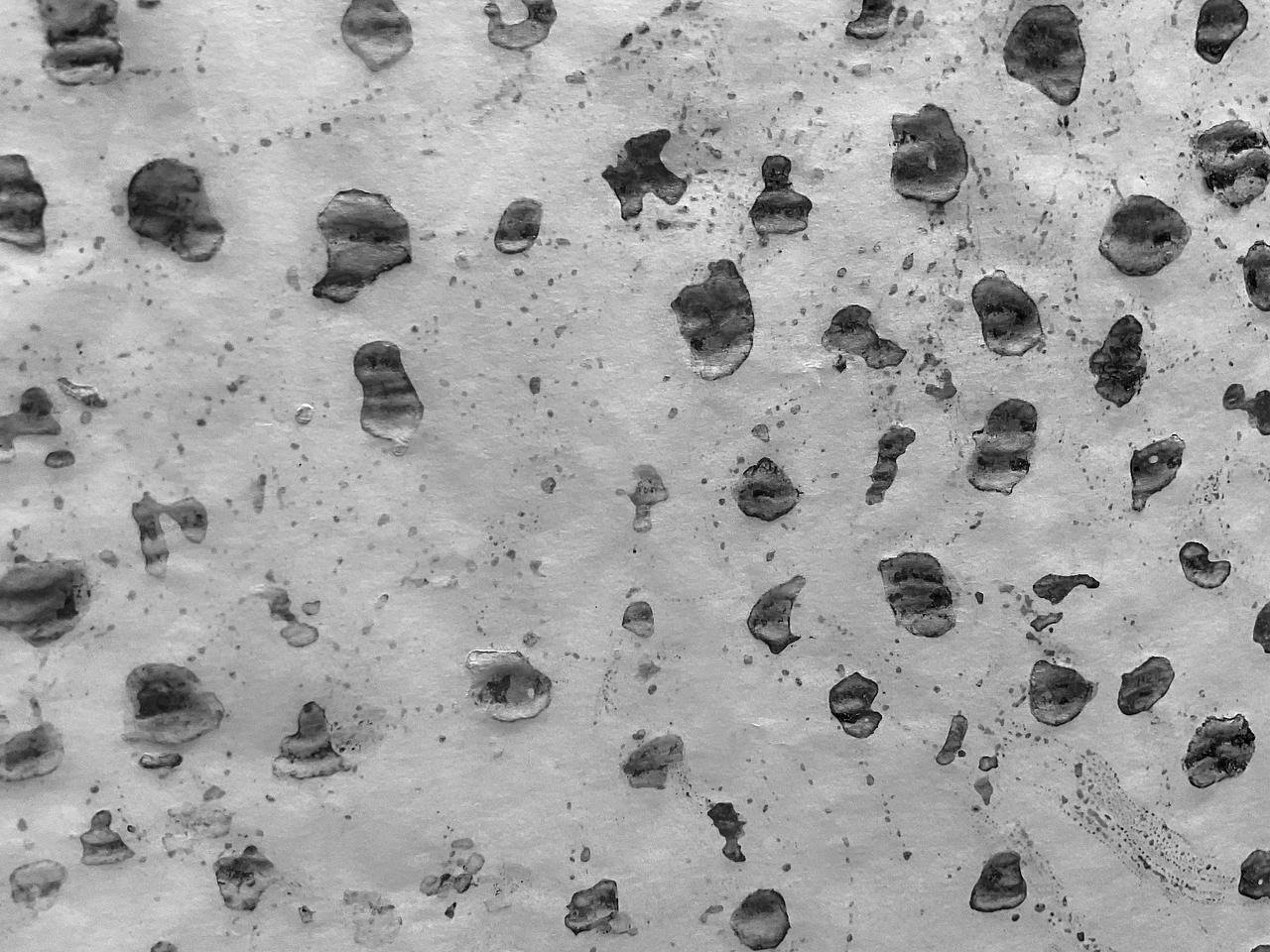
The inspiration for the first painting came by chance. The impulse was born from the traces left by baked chickpeas on baking paper. They reminded me of heads connected by dashed lines, which evoked the collective unconscious in my mind.
The creation of a draft in graphic software followed. During the design process, I worked with the surrealist method of psychic automatism. I executed it in a state of bodily fatigue from a lack of sleep and applied it to the technique of digital photomontage. The draft emerged gradually and spontaneously, from one element to the next, while leaving the final form to chance (I followed the same principles during the painting process itself).
Part of the creative process in making this series of paintings also involved connecting with my unconscious through reflective writing, daydreaming, or contemplating the images during the hypnagogic state while falling asleep.
Three further photomontages were created in the same manner, which I used as templates for the paintings executed in a mixed media technique involving oil, gouache, acrylic, pencil, coloured pencils, and pastel.
The execution of the first painting began by drawing the motif of overlapping brain scans with a graphite pencil onto canvas stretched on stretcher bars. Subsequently, I fixed the drawing and, once dry, complemented it with further layers painted in watercolour and gouache.
When creating the paintings, I did not adhere strictly to the template; the result is partially different in terms of both colour palette and certain elements. Through intuition, I involved the unconscious in the creative process, and many decisions were made during the creation within the so-called flow state.
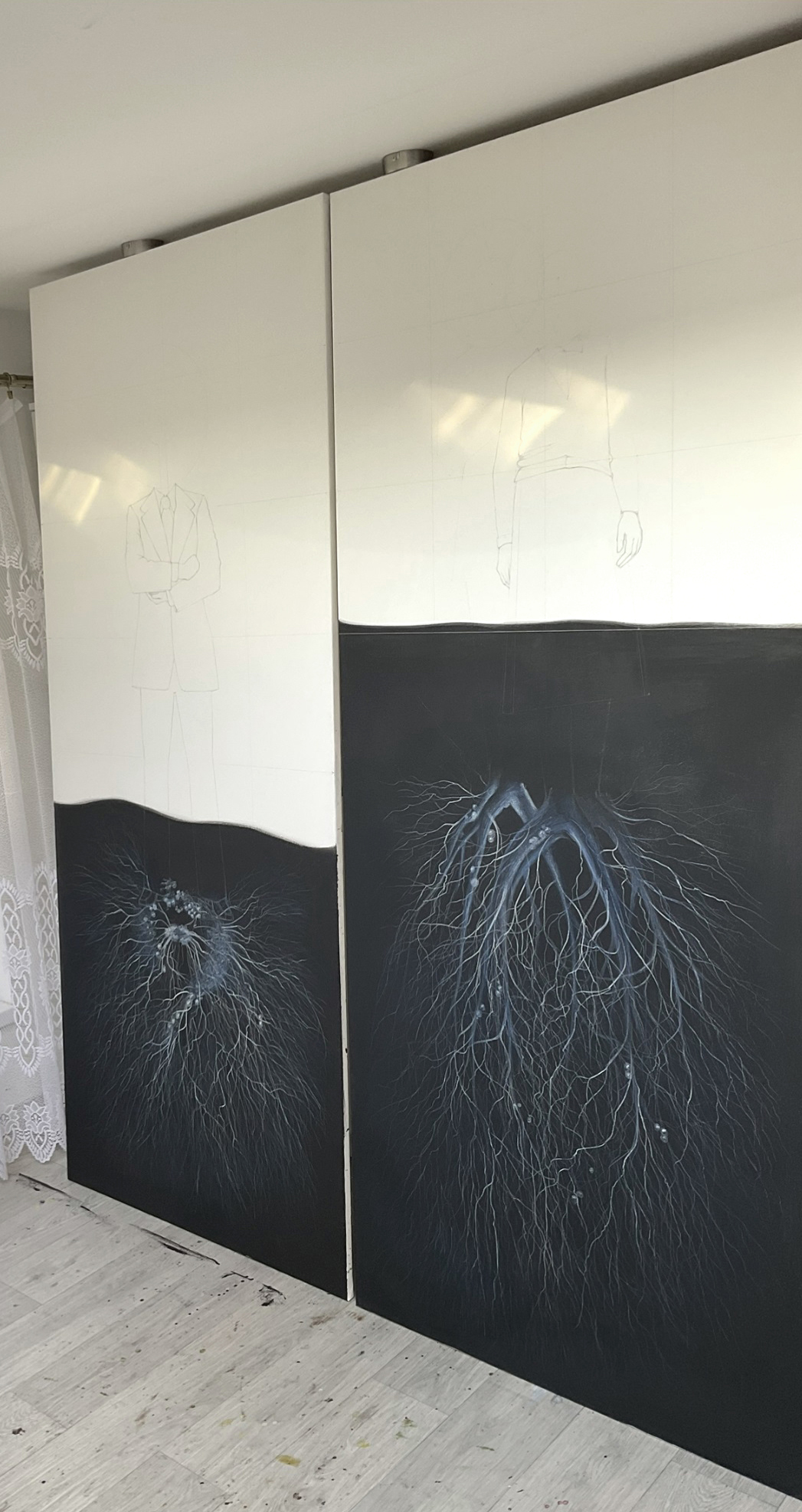
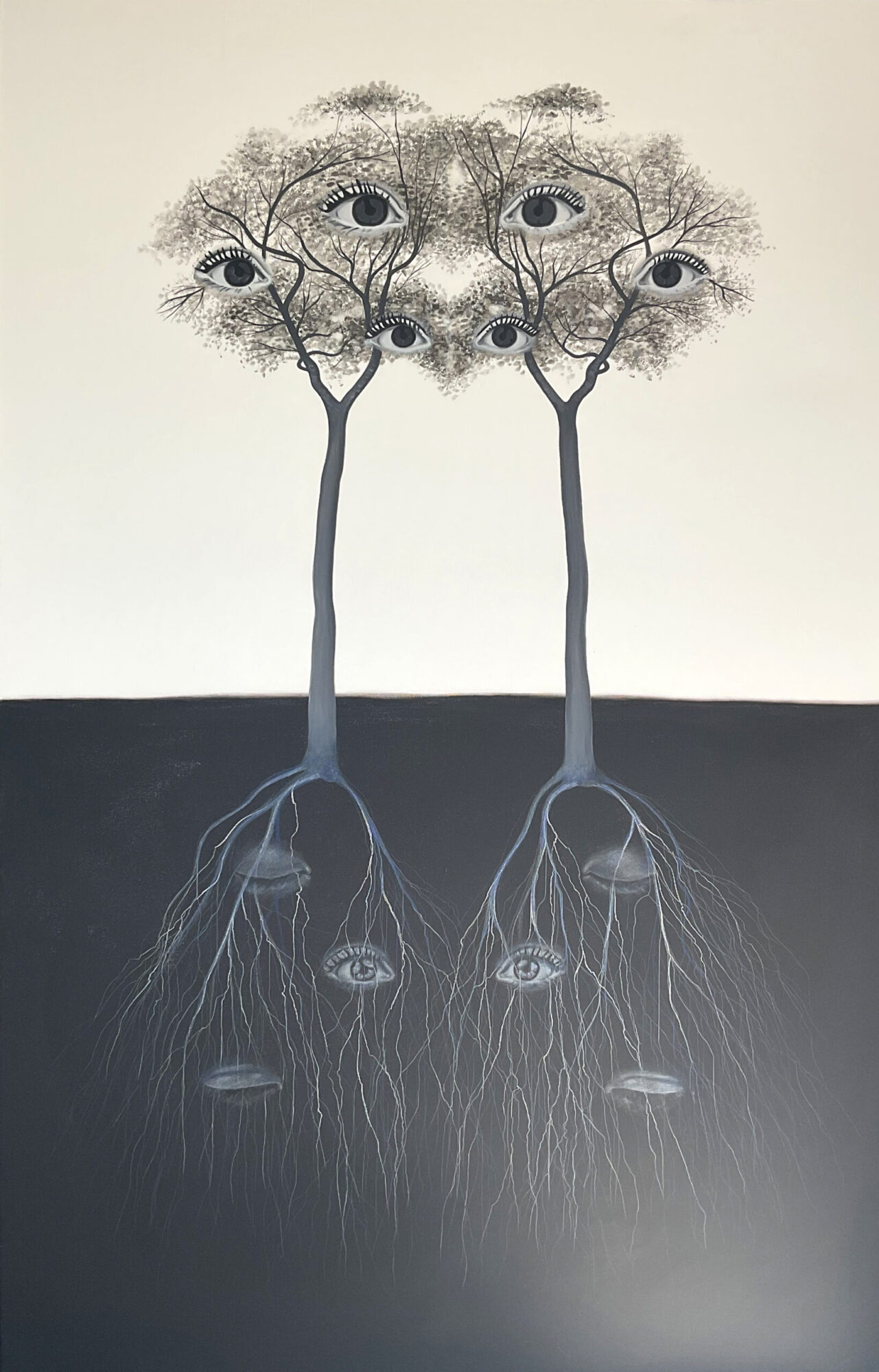
I created the following three paintings using a mixed media technique on stretched canvases. First, I applied a dark brown paint (a combination of acrylic and gouache) to the lower part of the paintings, then drew the root motif with pastel, painted the figures and the tree in oils underlaid with charcoal, and finally added the oil background. Lastly, I detailed the dandelion motifs using a graphite pencil.
The colour palette references Jung’s idea that the ego is just the tip of the iceberg of our psyche; this is also why the elements of the painting symbolising its conscious part are painted in shades of grey, while the roots, representing the unconscious part of the psyche, are in a blue-and-white combination expressing mystery, the richness of hidden contents, and its function as a source of creativity.
The last pair of paintings was created based on experiments with frottage, bleeding gouache, and my own photographs of ivy. I created the frottages on tracing paper using graphite powder.
I conducted the gouache experiments by applying paint onto a ceramic palette, spraying it with water using an atomiser, and subsequently pressing paper onto it.
Using graphic software, I adjusted the colour and contrast of the photograph, then duplicated and inverted it. The final outputs are two paintings on canvas: one symbolising the plant, painted more realistically with gouache, and the other representing its soul, drawn with white-coloured pencil and pastel and splattered with diluted white and grey gouache on a dark background.
I expressed the ethereal quality of the soul in the painting by replicating the effects of these experiments.
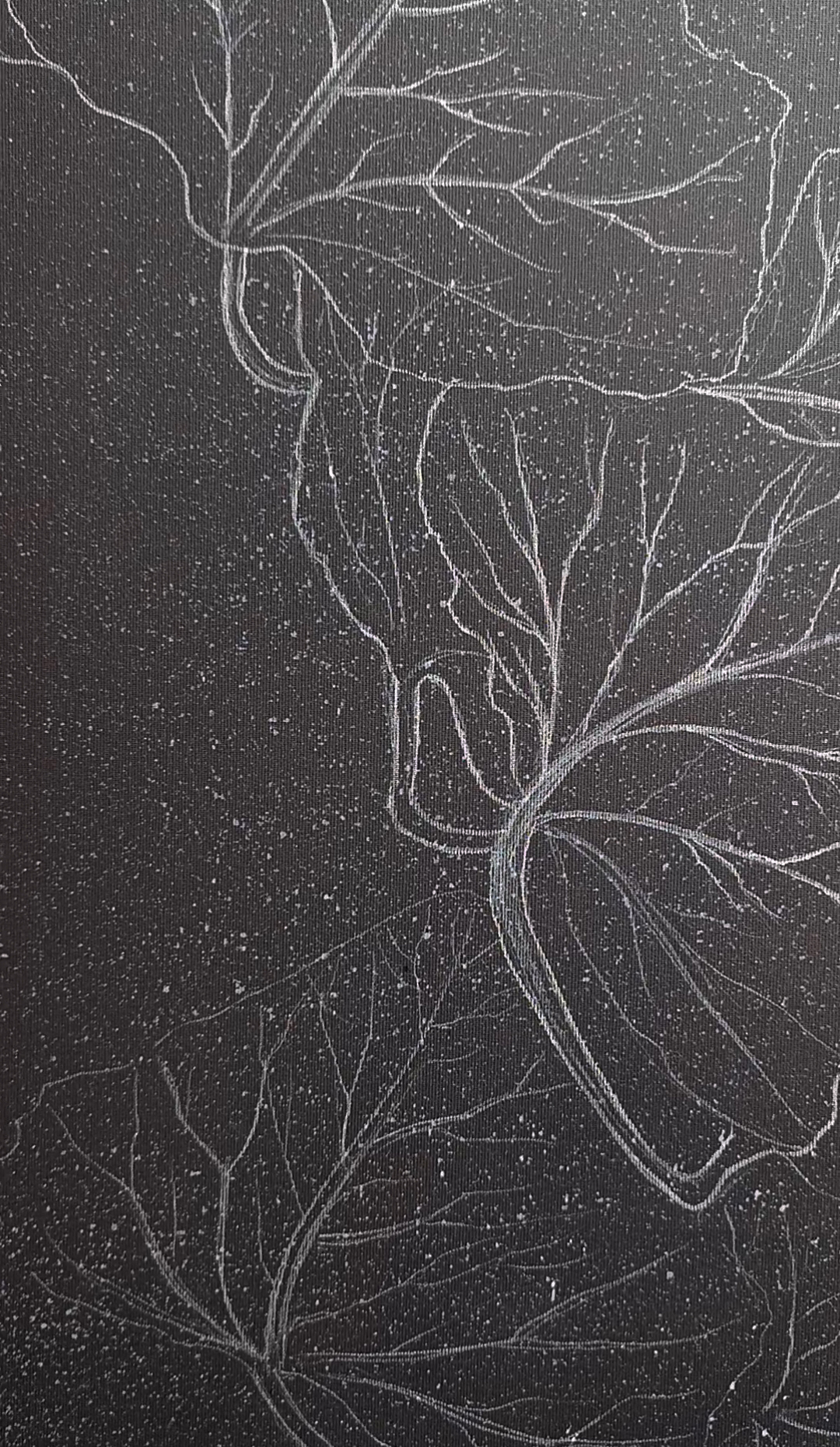
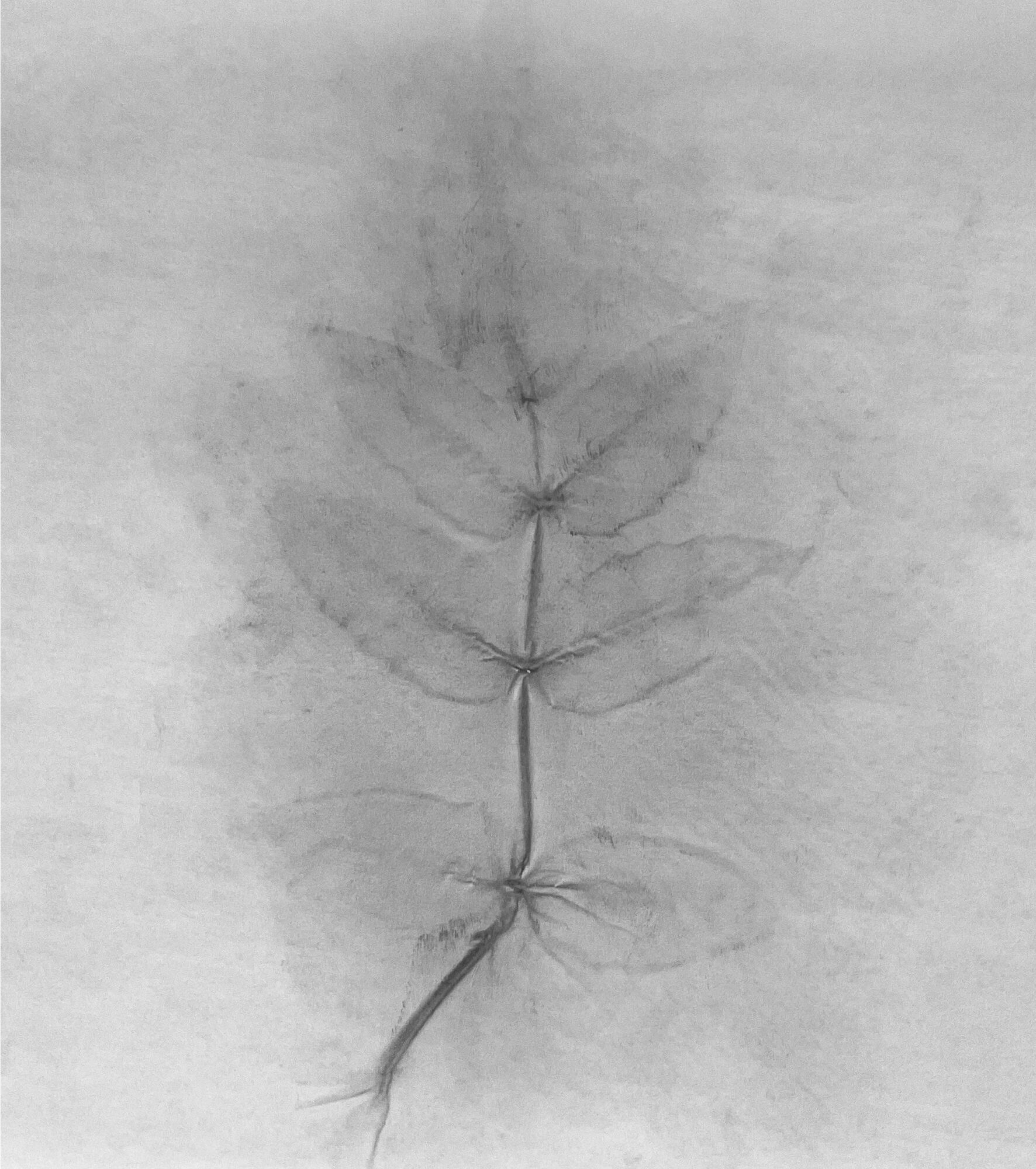
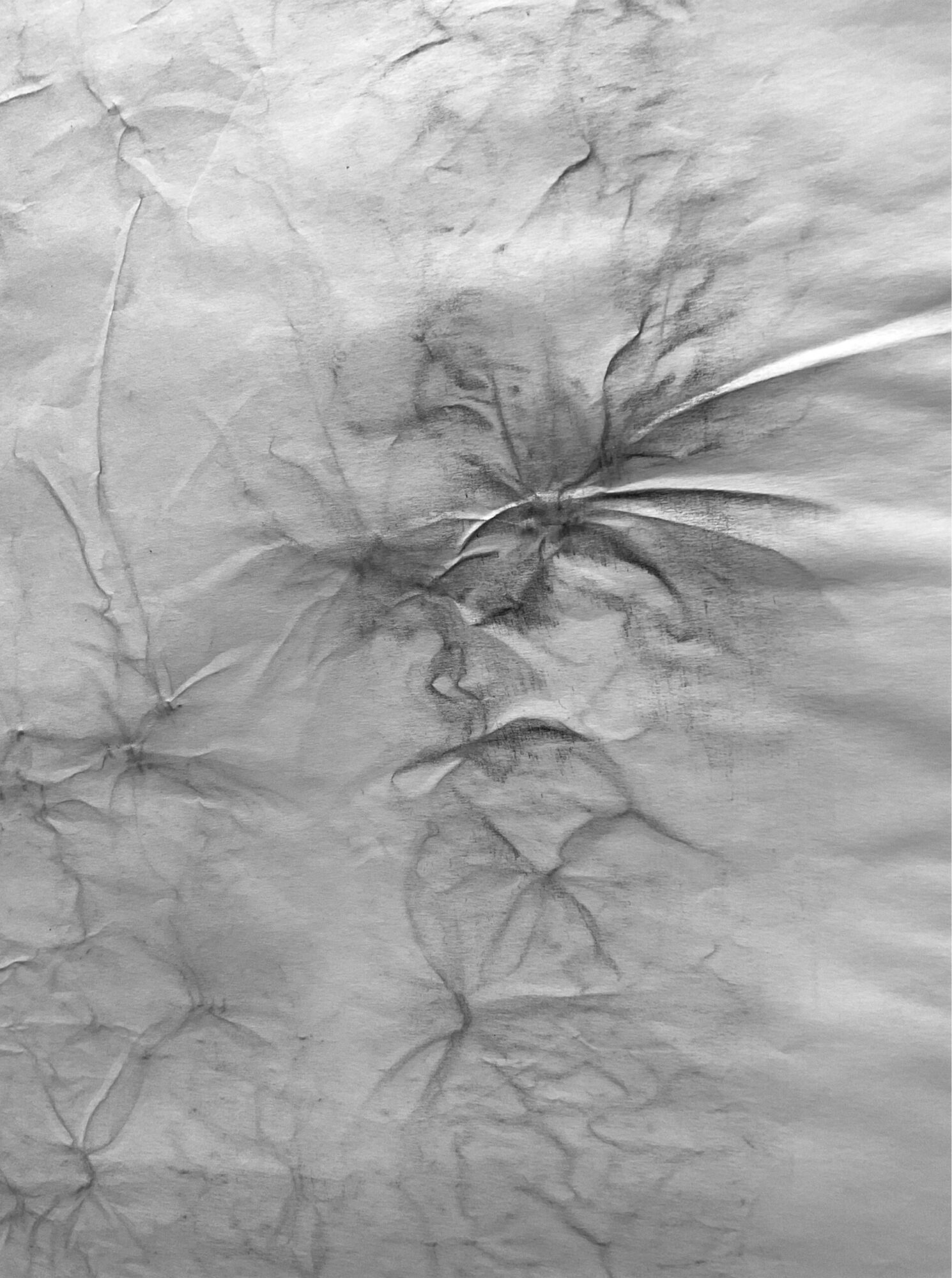
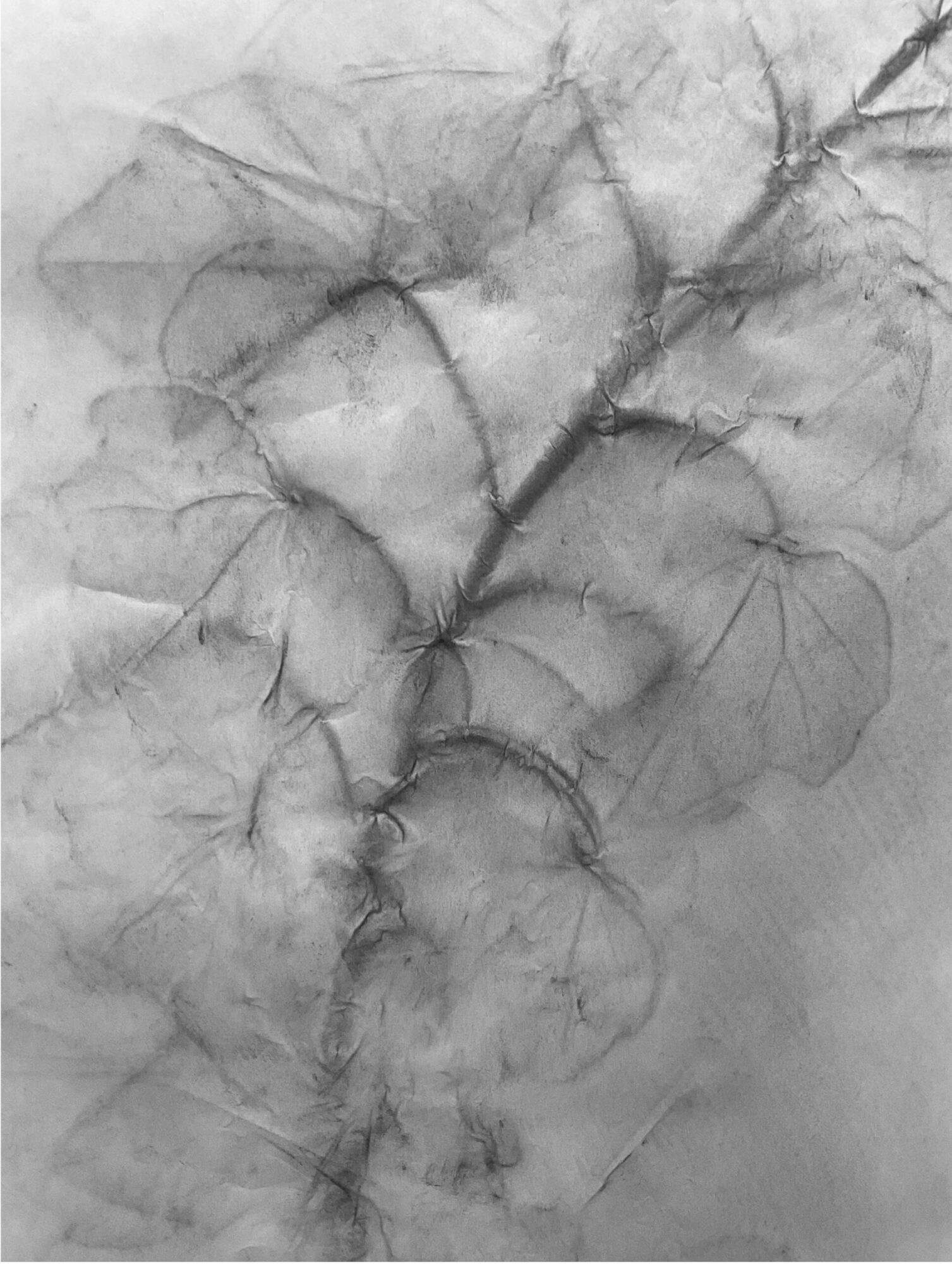
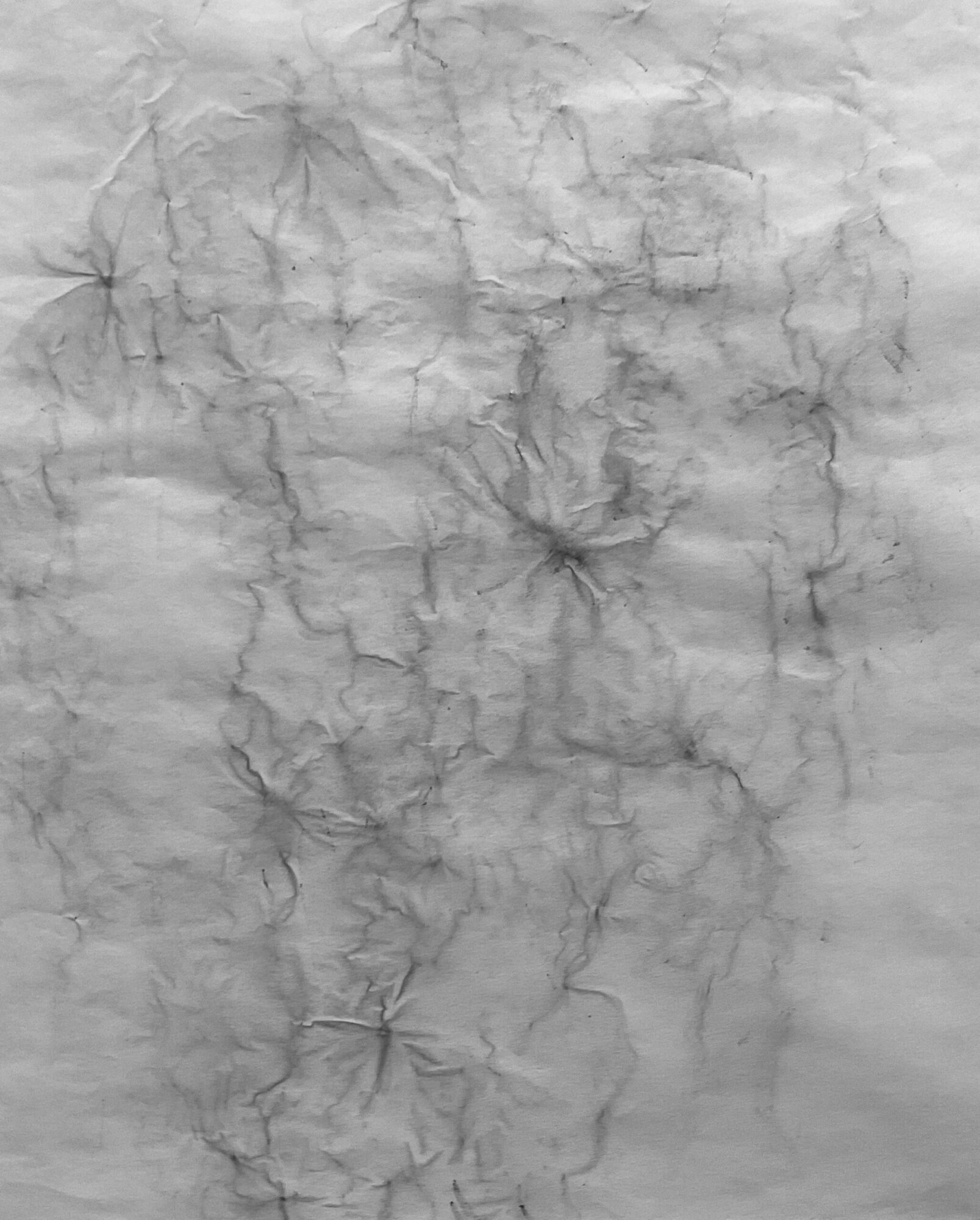
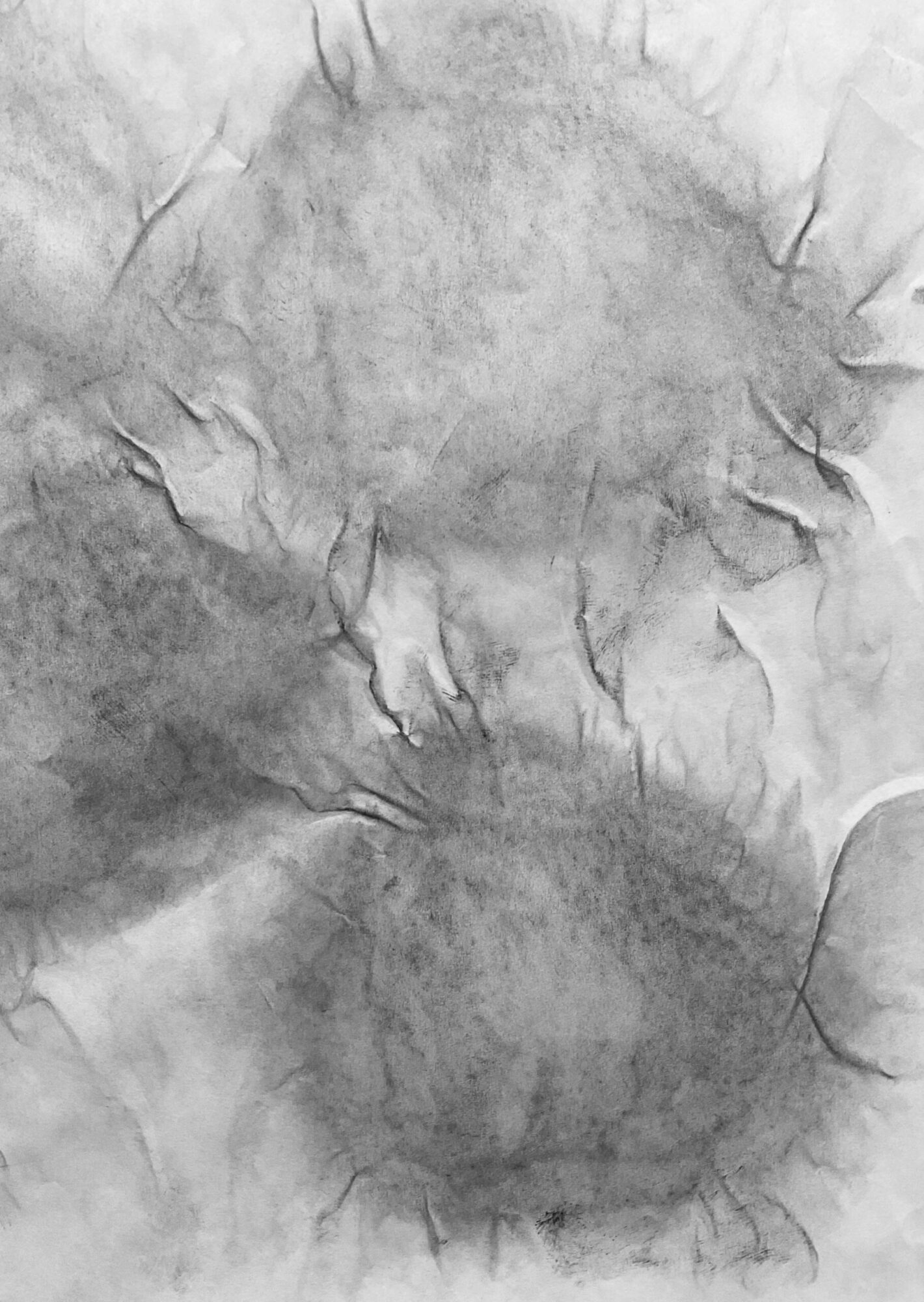
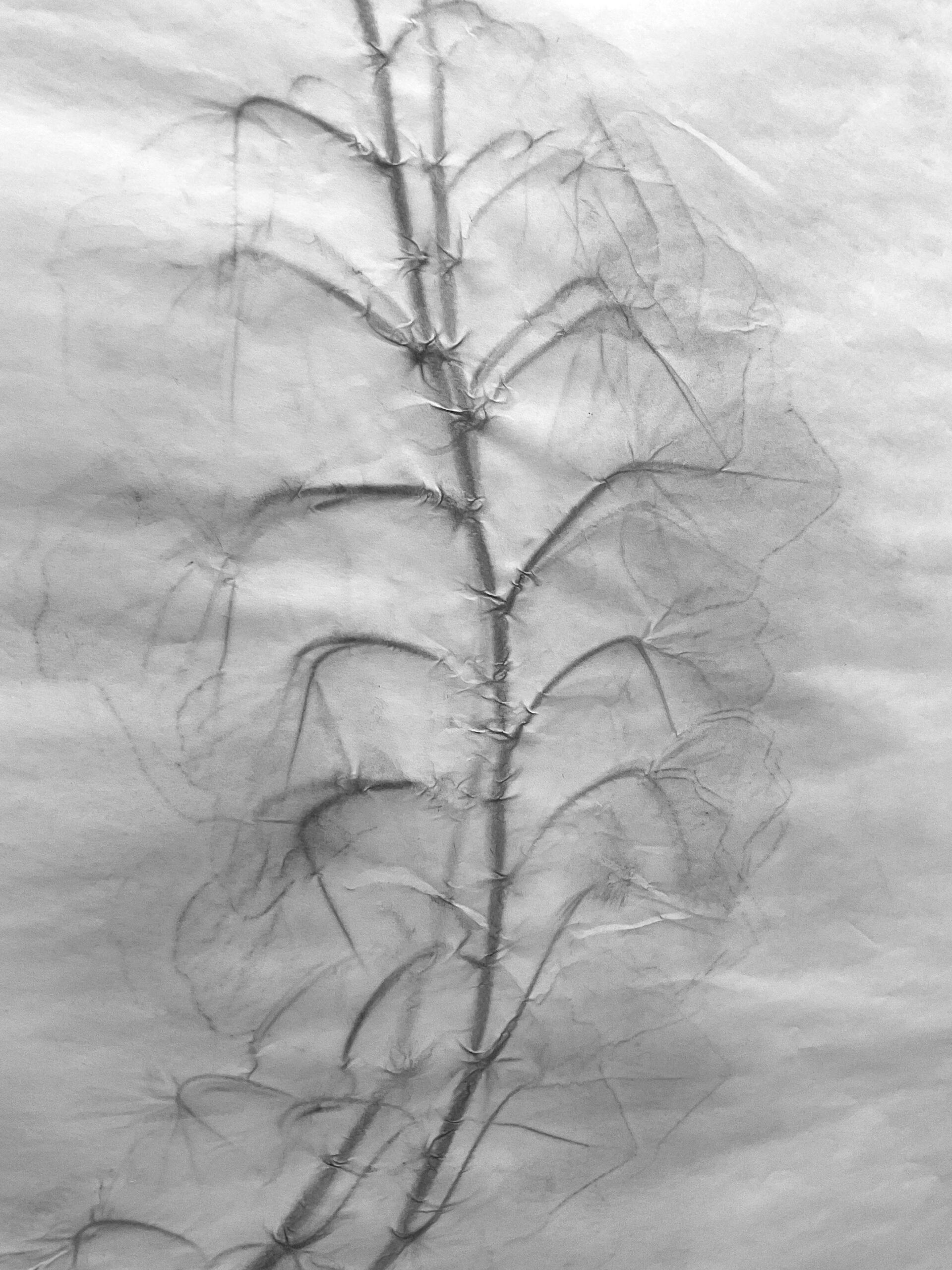
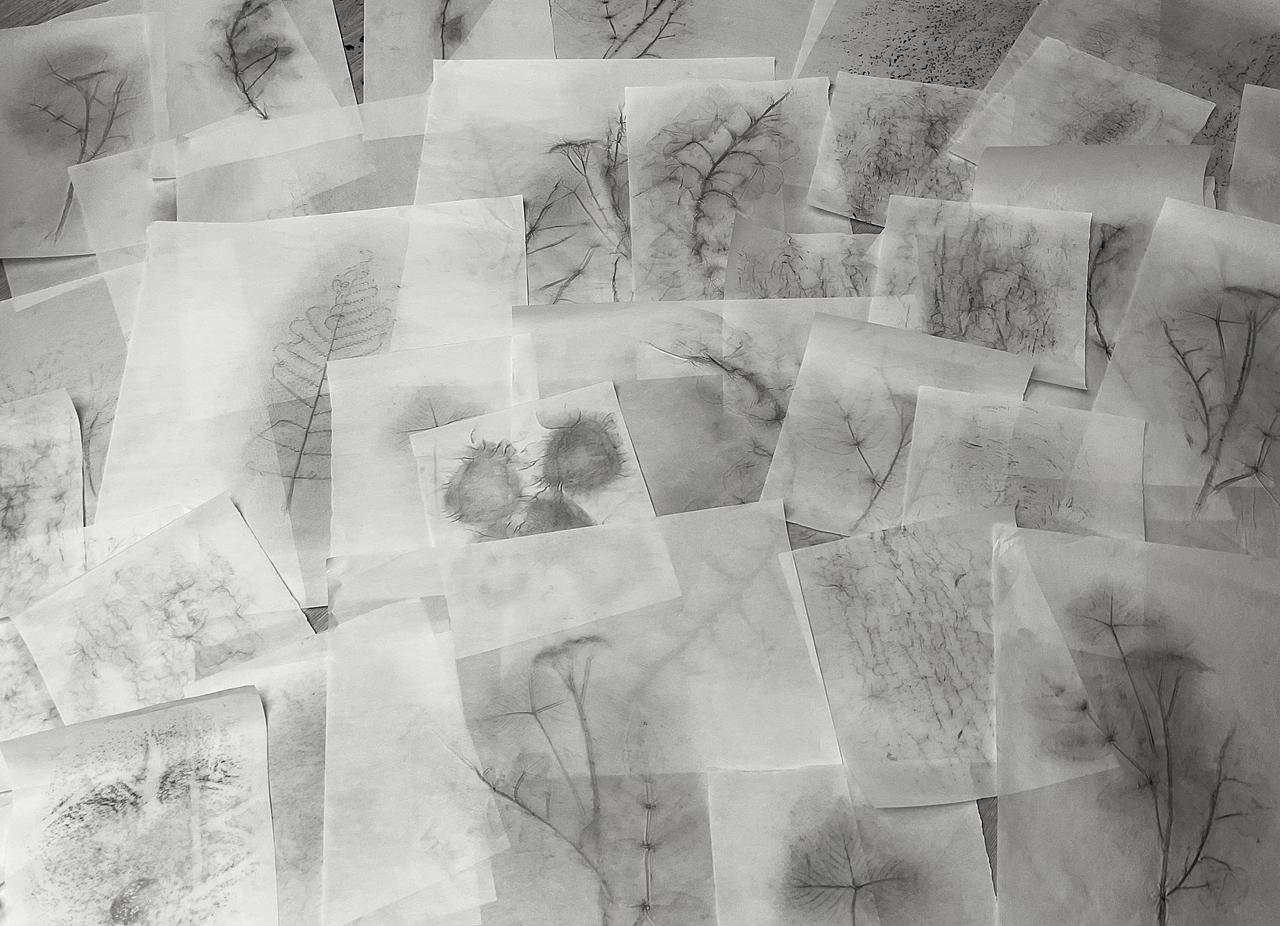
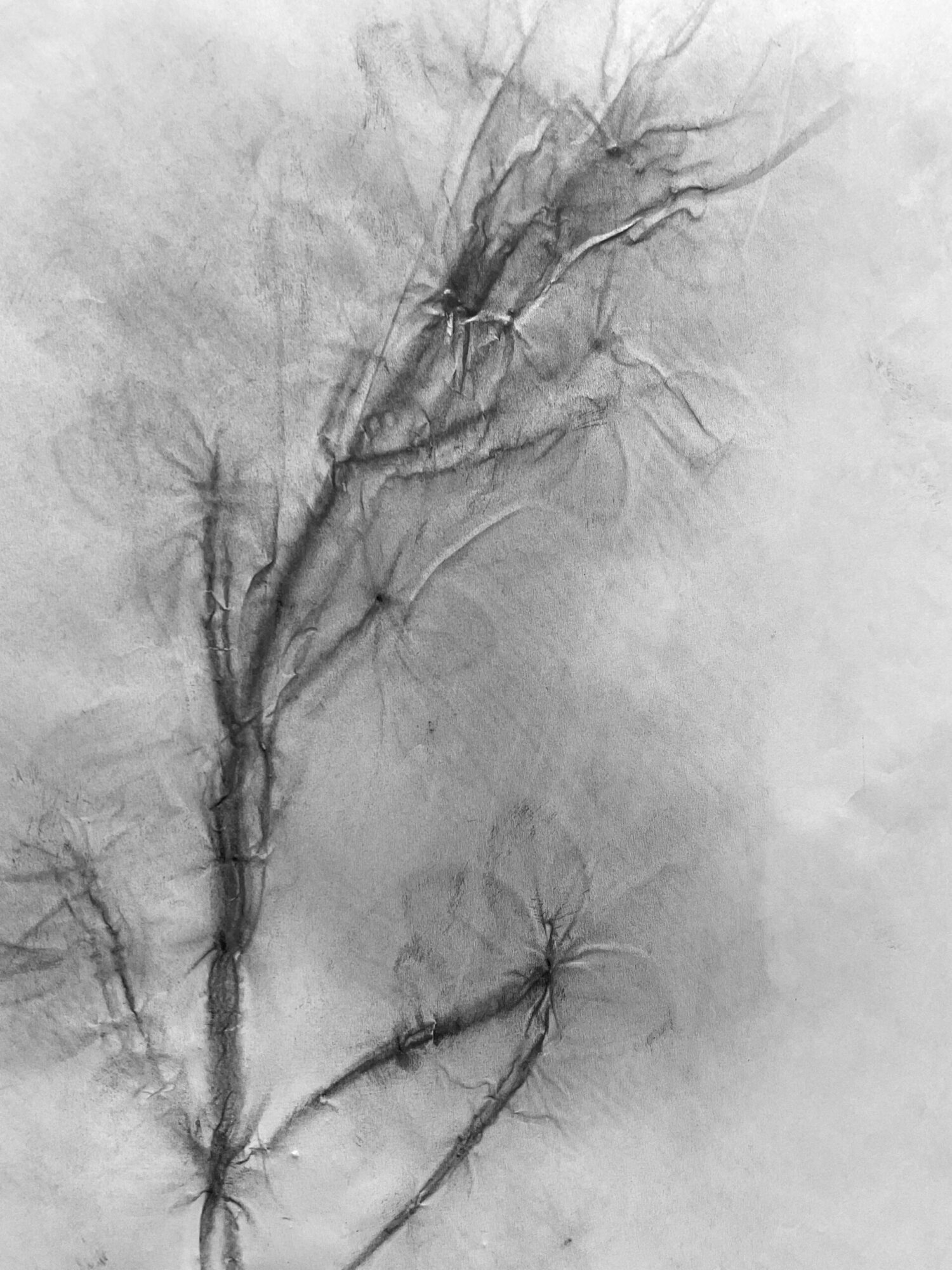
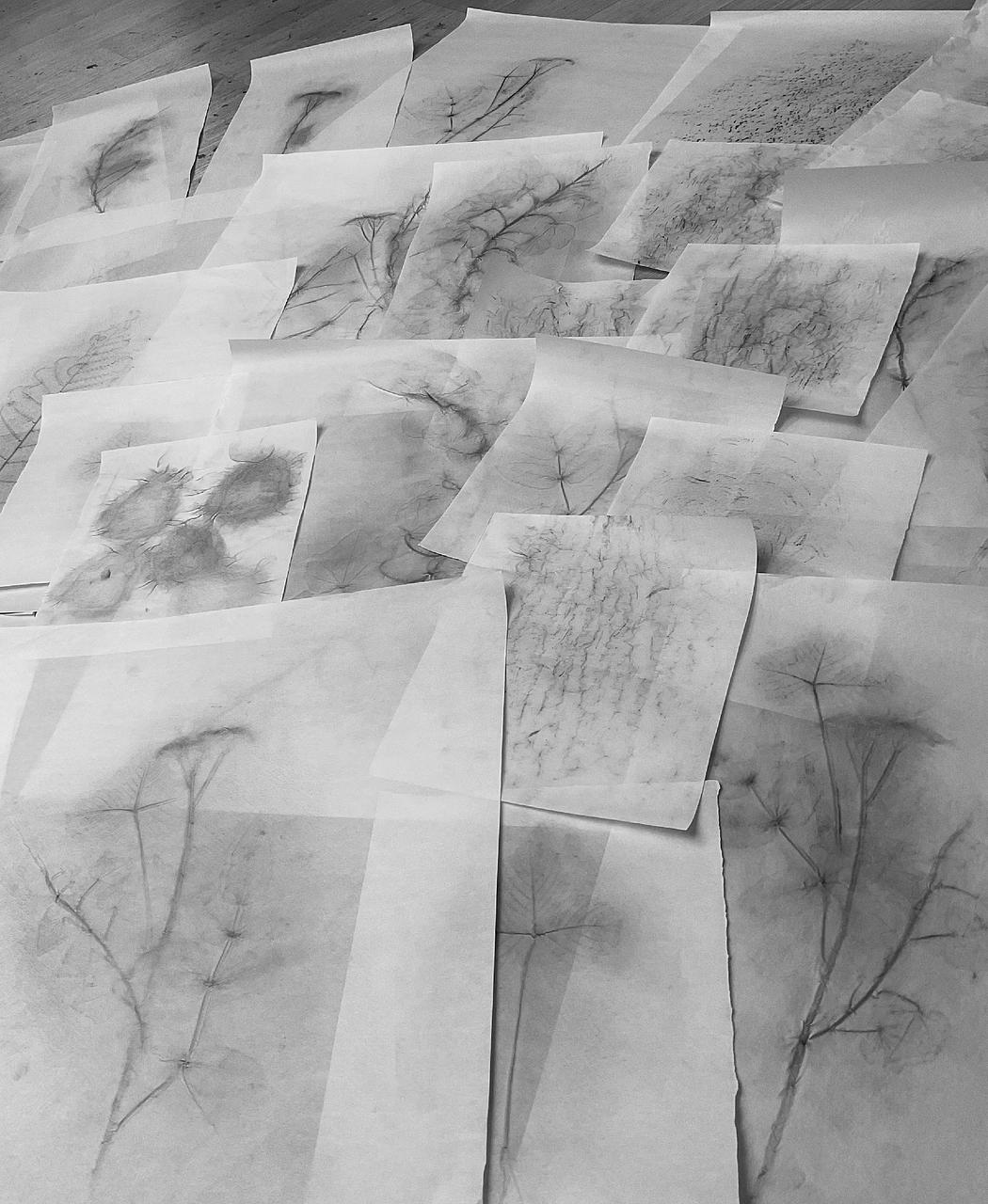
Experiments with frottage and gouache, which were part of the painting creation process
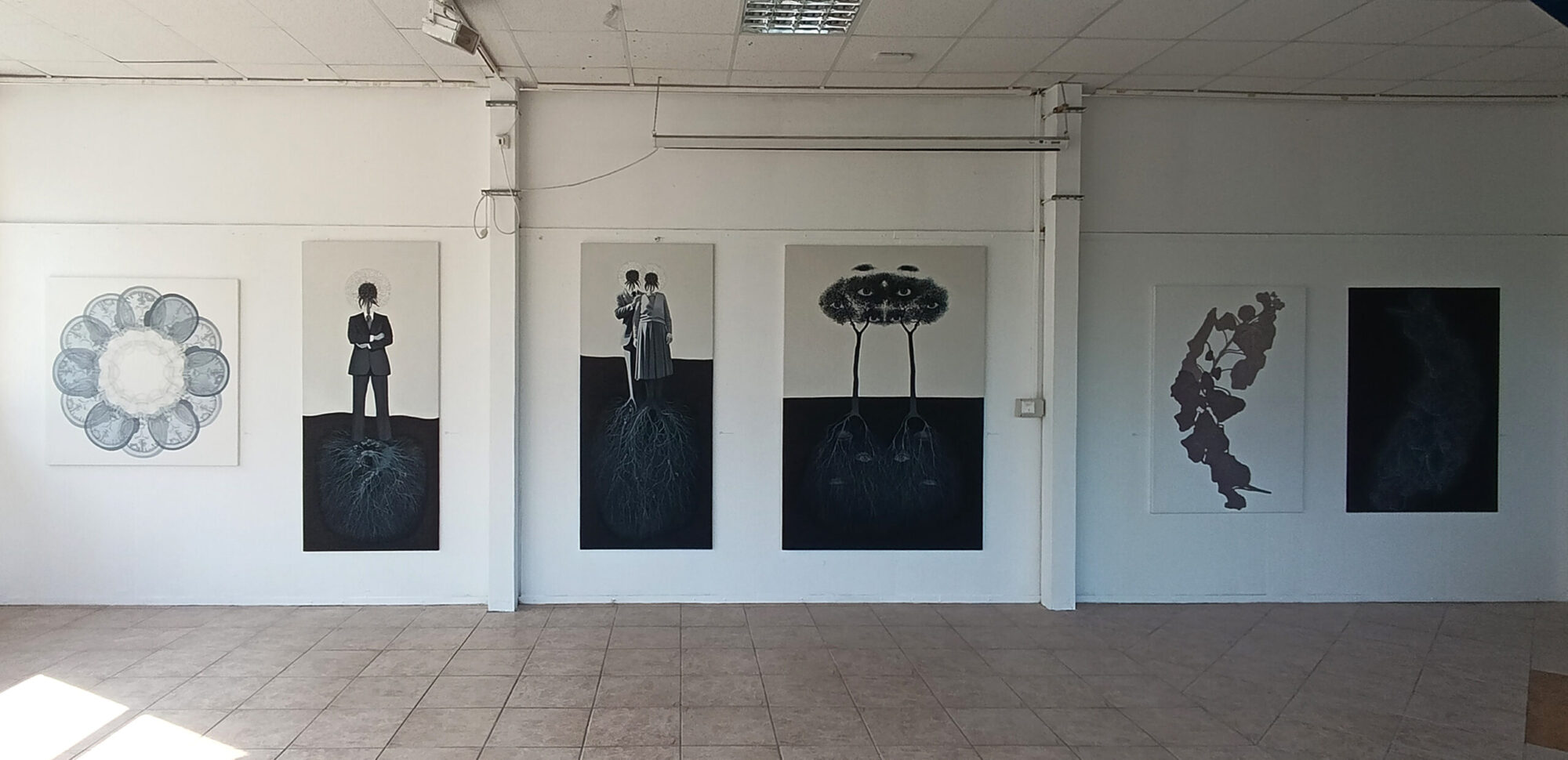
Installation view of The Soul of the World painting series, Academy of Arts in Banská Bystrica, 2025
The painting series The Soul of the World is the artistic component of my master’s thesis, titled The Secret Life of Things, with which I completed my master’s studies at the Academy of Arts in Banská Bystrica in 2025. The thesis supervisor is doc. Mgr. art. Ján Triaška, ArtD., and the thesis consultant is Mgr. Ivana Moncoľová, PhD.
I have compiled my master’s thesis into a series of texts published in the Texts section of this website.